Articles

Organic gardening – not what some people think

The expression “organic” gardening’s come to mean growing using only naturally-occurring materials and substances as fertilisers – as well as for pest and weed control, along with other manual or mechanical methods – which replace the use of synthetics. It’s not a condition of any Cardiff allotment that gardeners grow in this way, but plenty do, and many more do so in a practical, if not absolutist way too.

Organic growers will also often have a keen interest in environmental and ecological things – for instance be re-wilding activists – and have their own ethical angle, which can lead them to be vegetarian or vegan too.

The common – and sometimes unkind – caricatures of such people have led many to be misled, about what an organically-gardened plot would look like, and on the part of people taking on a plot to garden in that way, perhaps a mistaken idea, as to what one should look like, along with a sense of needing to conform to that. (That is, that it’d be a tangle of all manner of wild plant life, and of everything which goes with that – including exasperated neighbours, despairing at the myriad pests, seeds, and roots, which find their way onto their plots from it.)

Let’s recognise then, that if a plot’s going to be productive of food – as the Allotments Acts ask – then it’s unavoidable that there’s to be effective pest and weed control on it.

So, on a productive organic plot, typical methods would be the removal of, and constant disturbance of, the habitats for pests. That’d mean, for instance, that there wouldn’t be any dense patches of weeds close to crops, from which armies of slugs and snails would otherwise come to eat the produce. Along with this, if the ground were frequently hoed and raked to kill weeds organically, then at the same time, most slugs and their eggs living in the loose soil would also be destroyed.

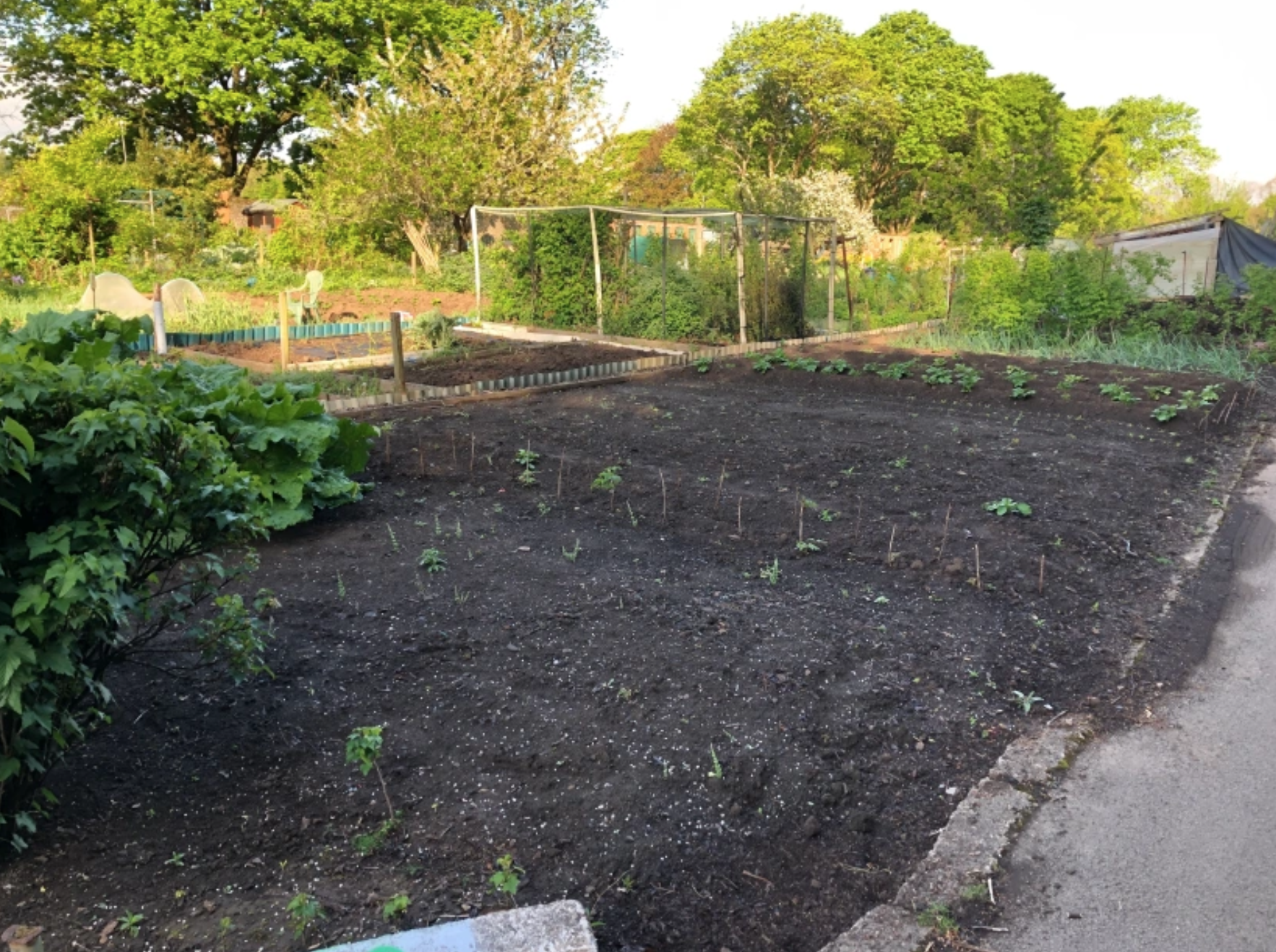
Alec and Angie’s plot beside the spine road is one of the most efficiently productive on site, and this is exactly the approach that they take. The regular use of hoe and rake is made easier by their keeping the soil in good, workable condition with the frequent digging in of well-rotted manure*, and recycled compost from their heap.

Weeds kept at bay by manual means, no harbours of pests, giving maximum productivity without synthetic chemicals. It’s also a great plot to have as a neighbouring one!

Bought fertilisers can be organic too, such as fish, blood, and bone, although vegetarian gardeners may understandably avoid some of these. Naturally-occurring dressings, such as gardener’s lime (mainly chalk, actually), the phosphorus-containing guano, and, for magnesium, Epsom salts, are also generally acceptable for the organic gardener.

Apart from its use as a fertiliser and soil conditioner, manure’s also hard to beat as a weed-suppressant mulch. Put on in a layer about 100mm (four inches) thick, after harvest and weeding, it’ll prevent the survival of the great majority seedlings which germinate beneath it, by sheer thickness and impenetrability. This’ll steadily rot until the next growing season, and at the same time soil life will also break it down, and mix it in with the soil.

Happy gardening – and eating!

*For the purist, allowing manure to rot for a good period before use – ideally two seasons – ensures that any veterinary medicines – or hormone weedkiller residues in the hay eaten by horses – will have been broken down by microorganisms and reduced to insignificant levels. (The RHS advice is that this is less important if the manure is simply to be used as a mulch, rather than being dug in.)

PPA Website Team

Hogweed danger warning

Common hogweed growing on a plot

Hogweed – and its near relatives – are endemic on and around PPA site. It’s a member of the carrot family, and quite a few of these, but notably hogweed, are capable of causing skin injuries, such as blisters and rashes. These may be picked up by handling the plant material, allowing its hairs or prickles to penetrate the skin, or by the splatter of semi-liquid material when strimming. The harmful effects are greatly increased by exposure to light. Common hogweed is not as virulent a danger as its giant sister – which may grow to the height of a lamp post – but it contains exactly the same toxins, albeit in lower concentrations.

The blisters and sores can be nasty, and leave long-lasting marks on the skin. It can be a particular danger if splatter should enter the eyes in sunny weather, so when strimming anywhere near this plant we should cover up well and wear a full face visor. PPAA Committee volunteers, and plot holders, have recently been hurt by both of these means.

Left alone the plant is harmless, and its flowers are a great source of nectar for bees. However, it is a prolific seeder, and its deep tap roots – it’s sometimes called cow parsnip* – can make it hard work to eradicate by non-herbicidal methods.

Stand of hogweed in the park

*The folk name cow parsley is usually applied to anthriscus sylvestris or wild chervil, but is also sometimes used for a range of plant genuses of this family of similar appearance e.g. wild carrot, and so on.

PPA Website Team

Netting dangers to wildlife

The other day I found a greenfinch – I think – trapped inside our cabbage netting. I’ve no idea how it got in, the mesh is too small and it’s well-pegged down, but there must have been a gap somewhere. Fortunately I was able to release it easily enough.

Today I came across what appeared to be a sparrow hawk, trapped in a neighbour’s netting, but this had quite large gaps at the bottom, and it was easy to see how it had got in. Again it was no problem to release it.

If I personally have come across five or so cases like this in this one season, then it must be very common on the site.

So this is a general heads up, for everyone to make sure that there aren’t any ways for birds to end up inside our nets. Any unused net should also be bagged – an old carrier bag, anything will do – or boxed, and not left lying around for hedgehogs to become entangled in it.

This said, netting, when used with care, is a far better way to protect our food from the cabbage white butterfly, and from pigeons, than insecticide sprays and bird scarer kites are.

MP

Bamboo – hoo – hoo!

Bamboo can be an attractive garden subject, and also produce useful canes, but this article in the press – and other recent media coverage – reminded us, that there can be problems, and that a few years ago, the then site rep noticed that several plot holders had this growing on their plots.

Bamboo, grown as an ornamental plant and also for its canes

Bamboo isn’t a broadleaf, nor a conifer, nor a willow tree, and so the Tenancy Agreement doesn’t seem to cover it. It is, in fact, a kind of grass. This uncertainty has led to problems for councils and tenants alike, with councils one moment directing committees to tell plot holders in no uncertain terms to remove their bamboo, only apparently to change their minds shortly afterwards. Furthermore, if the council failed to make clear to the plot holders concerned that they had issued the earlier directive, then this in turn could lead to problems between tenants and committees, or their members, whom the former might assume to have been needlessly bothering them.

As the article makes clear, bamboo – when not constrained, e.g. in a planter, sunken or otherwise – can be a serious invasive problem.

Cardiff Council are presently holding Working Group meetings to examine reform to the terms of allotment tenancies, and to the fees and charges relating to them. A PPAA Committee member is one of its attendees, and at the last meeting the Chair of Cardiff Allotment Holders’ Association (“CAHA”) proposed that bamboo and other invasive non-native species be expressly added to the list of subjects which may not be planted or maintained. (Whether that might be implemented remains to be seen, however.)

Whatever, for the time being, if anyone has this growing on their plot, then they need to make sure either that it’s properly controlled as outlined, or to remove it completely.

(Any container needs to be proof enough so that the spreading roots or underground stems – rhizomes – don’t escape through any holes to invade neighbouring plots etc.)

PPA Website Team

Minutes For PPAA Committee Meeting, Tuesday, 2nd July 2024, 1900, At Butcher’s Arms, Canton

Present: Sue Jones (Acting Chair), Wendy Gunter (Treasurer), Mike Powell, Rhys Williams, Jane Davies, Martin Pasek, Keith Ball, Nerys Lloyd-Pierce, Gordon Goldsmith

Apologies: Lewis Evans

The meeting opened at 19:00.

Previous Minutes:

Matters covered below. 

Chairman’s Report:

Covered below.

Site Secretary’s report (shared role):

Sue reported there are currently five vacant plots. PPA welcomed eight new plot holders in June. Plot viewings are ongoing, as is some clearing work where needed. There have been two structure applications approved.

Work continues by the Parks Department towards a new computer management programme. The expected completion date of June has now passed, but with no new completion date yet provided. While this is ongoing all of the Cardiff Allotments waiting lists remain closed.

Fly-tipping: 

Three related incidents of fly-tipping on the 22/6, 23/6, and 24/6 have been reported to the Police and to the Council Waste Enforcement Department, supported by CCTV images and by the accounts of two eye witnesses.

Treasurers Report: Wendy 

The sum raised by the June plant sale has now reached £472.05 and the accompanying shop sale £194.50.

Our annual grant from the Council of £5085.29 has been received.

Plot Inspections: Mike

Between the 10th and 12th June the first plot inspections were carried out by a team of four. This resulted in thirty-six ‘Letters of Concern’ being issued. In response three potholders voluntarily ended their tenancies.

Fourteen days later the second inspection of the remaining thirty-three plots was carried out. Eighteen had improved significantly and the remaining fifteen were issued with a ‘Notice of Non Cultivation’.

The final inspections will take place 28 days after the second.

Going forward the Committee discussed starting the Plot Inspections process in March to fall in line with other Cardiff sites.

Trees: 

Mike has carried out a tree survey of the site. He identified four dead or dying large trees on the sites boundaries. Mike to follow up with the council.

Twenty-nine trees were noted on plots which required major effort to bring into line with the Council’s rules on trees. Lewis Evans had asked in his absence for there to be a discussion about legacy trees, and help with management. Gordon suggested a five year plan. Mike and Rhys to progress.

Allotments Fees and Charges, And Conditions Of Tenancy Working Group Meetings:

Martin attended the first workshop. Jon Maidment Head of Parks chaired the workshop which was attended by two other council officials and five representatives from various Cardiff Allotment sites, National Allotments Society and CAHA. This was the first of four proposed meetings, it’s aim being to focus on desirable revisions to the tenancy agreement.

As a result of discussions at this meeting Martin proposed a motion to the PPAA Committee, to enable him to represent a consensus view in response to particular proposals at the next meeting.

The motion was – ‘This Committee believes that its main purpose is the promotion of the use of PPA’s allotments as defined by the Allotments Act 1922’*

The PPA Committee was unanimous in passing the motion.

AOB: 

Rhys commented on the success of the wildlife cameras in capturing antisocial behaviour.

Wendy mentioned plot holders wanted to know about wood chip deliveries. Discussion resulted re the seasonal nature of supply and quality of wood chip.

Jane wanted to be assured that all emails received on the PPAA email are answered, when an answer is required. She was assured that they were.

Nerys raised hedgehog ‘highways’ and will report back. Ponds on plots not having a means of exit eg a ramp, for wildlife if they fall in was mentioned as a concern.

There being no further business, the meeting ended at 2025.

The PPAA Committee meetings are regularly scheduled for the first Tuesday in the month, but it was agreed to not meet in August to allow for holidays, therefore the next meeting will be Tuesday 3rd September 2024 at 1900, at the Butcher’s Arms, Canton.

*”For the purposes of this Act, where the context permits—

The expression “allotment garden” means an allotment not exceeding forty poles in extent which is wholly or mainly cultivated by the occupier for the production of vegetable or fruit crops for consumption by himself or his family”

Cars on PPA site – the coin with two sides

Complaints against car drivers

PPAA Committee have recently received complaints – from more than one plot holder – of cars driving over part of their plots in order to save care when turning off the spine road and onto side tracks. Understandably, these gardeners have taken steps to stop this, by placing posts or other objects on their plots to cause drivers to be more considerate. It’s quite shocking to hear then, that these drivers have apparently destroyed these fixtures, throwing them aside, to enable them to drive over other people’s gardens.

This is simply wilful damage, and if traced, then the perpetrators risk prosecution, and also the loss of their allotment tenancies.

Vehicles are accepted onto PPA site, but that absolutely does not mean that drivers have an unqualified right to access their plots by such means, even if that entails driving over someone else’s. There is no such right stated in the Tenancy Agreement.

Complaints by car drivers

We now come to the other side of this coin.

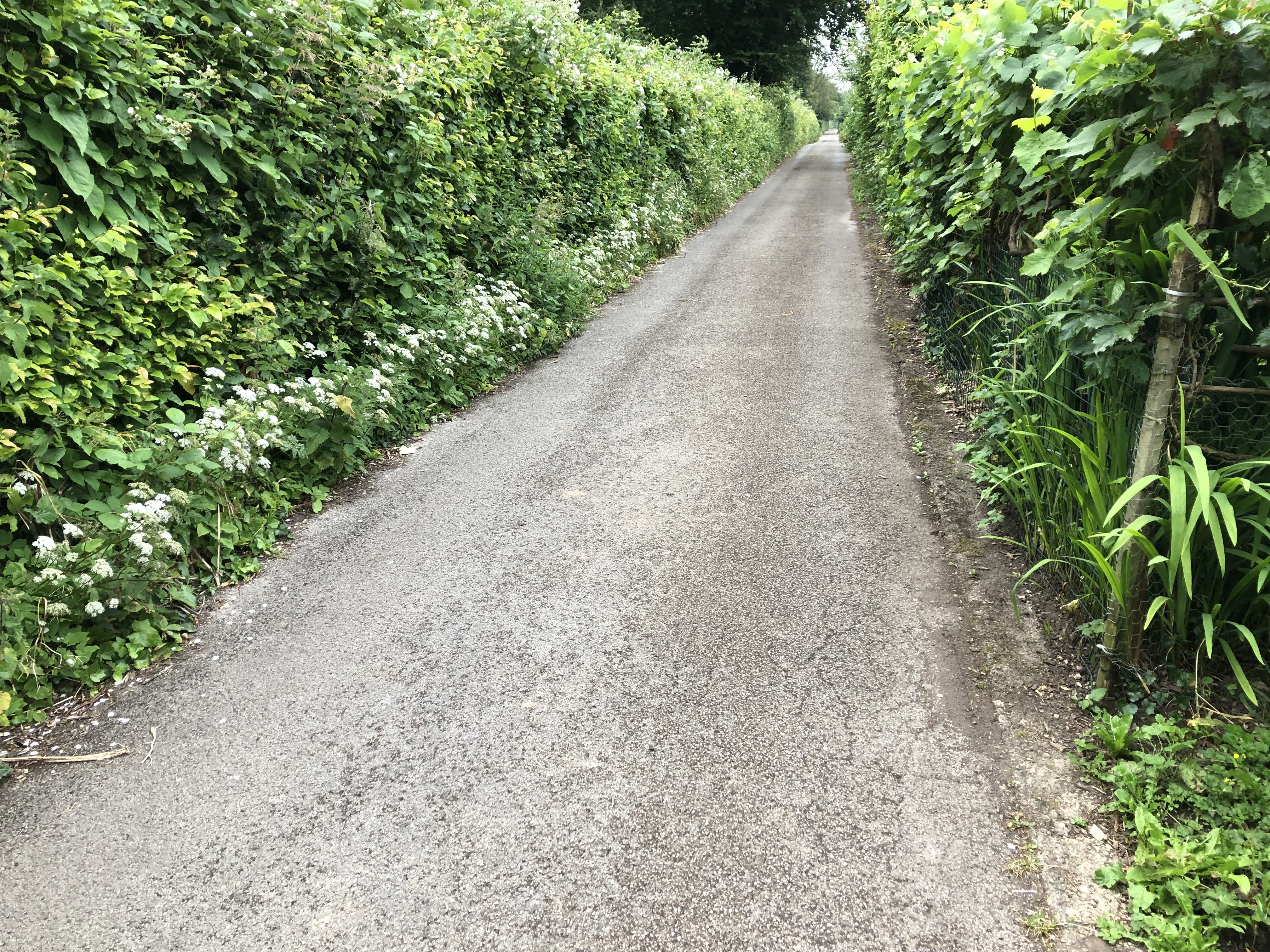
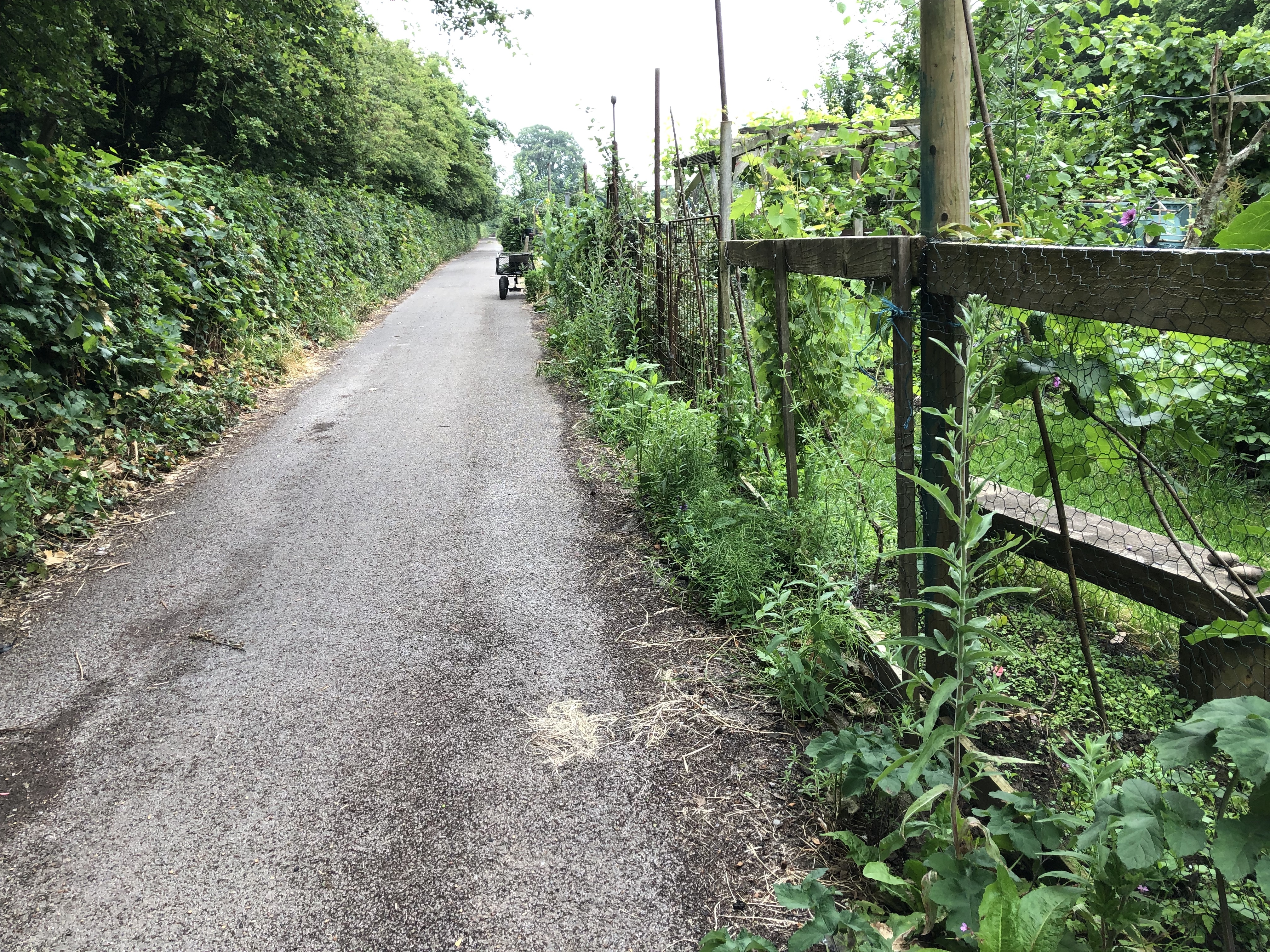
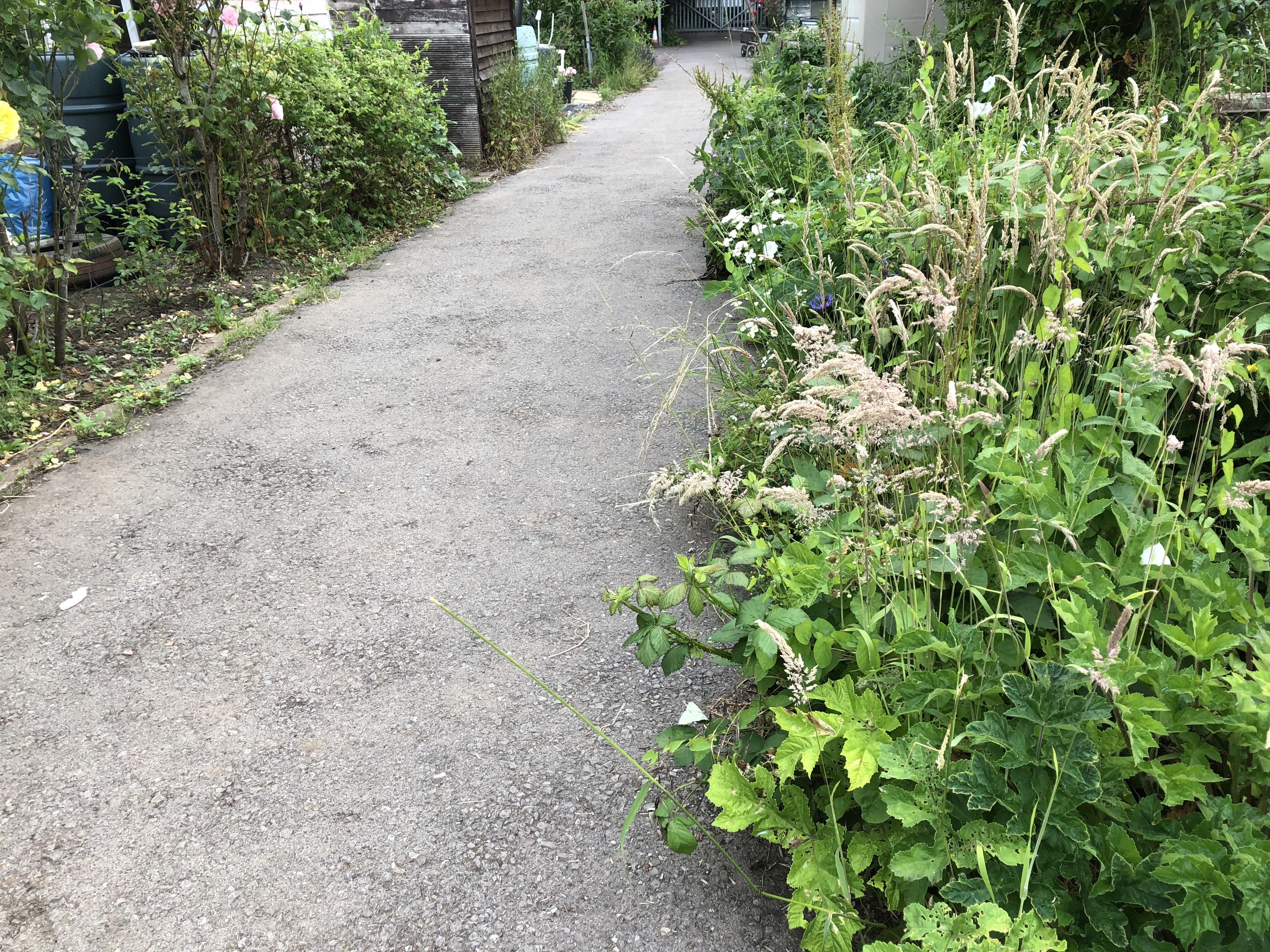
It’s a condition of tenancy that the occupants of a plot don’t cause nuisance to any other Council property, or injury or obstruction to any track or path. It has to be said that there are too many plots, which adjoin trackways, where the tenant has allowed vegetation – whether crops or weeds – to overhang the trackway, or to grow in the cracks between edgings, in accumulations of leaf mould, and so on. PPAA’s understanding is that where a plot adjoins such a track, its tenant is expected to keep the edgings weed-free (this applies whether or not the tenant has erected rabbit fencing etc., which they might claim to be the boundary of their plot – it isn’t). Now, it seems that where people have failed to do this, aggrieved drivers may have resorted to self-help. Whatever, as long as they don’t harm any crops or anything else on the actual body of the plot, then without more, they have done no particular wrong in so doing either.

Here are some examples of properly-maintained edgings, and of some which aren’t.

Right!
Right!
Right!
Wrong!
Right and wrong! (left and right edgings)
Wrong!

It isn’t just car drivers who need clear trackways. Nor do pedestrians and cyclists want to be hurt by injurious thorns, or by other nasty things projecting into their way.

Let’s all be considerate.

PPA Website Team (striving, as ever, for balance)

Restitution of “shady” plots – update

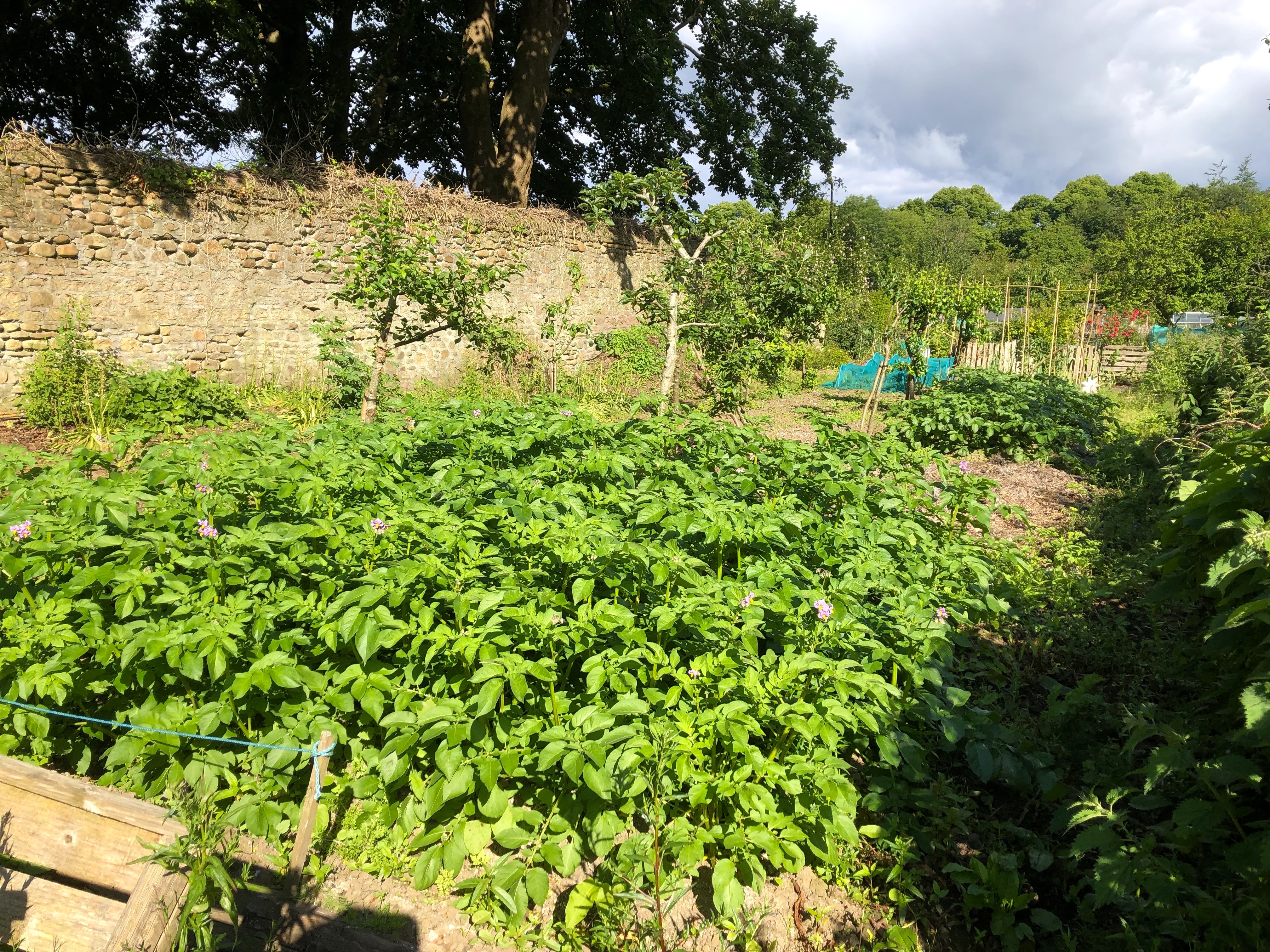
As mentioned for the AGM, volunteers have restored some 450 square metres of plot to rentable condition, and a similar area is in the process of restitution. The Council have emphasised the importance of this, with about a hundred people on the Waiting List. However, a few plot holders expressed scepticism that these plots would ever be any good.

Well, the camera never lies, they say, so take a look at these pictures.

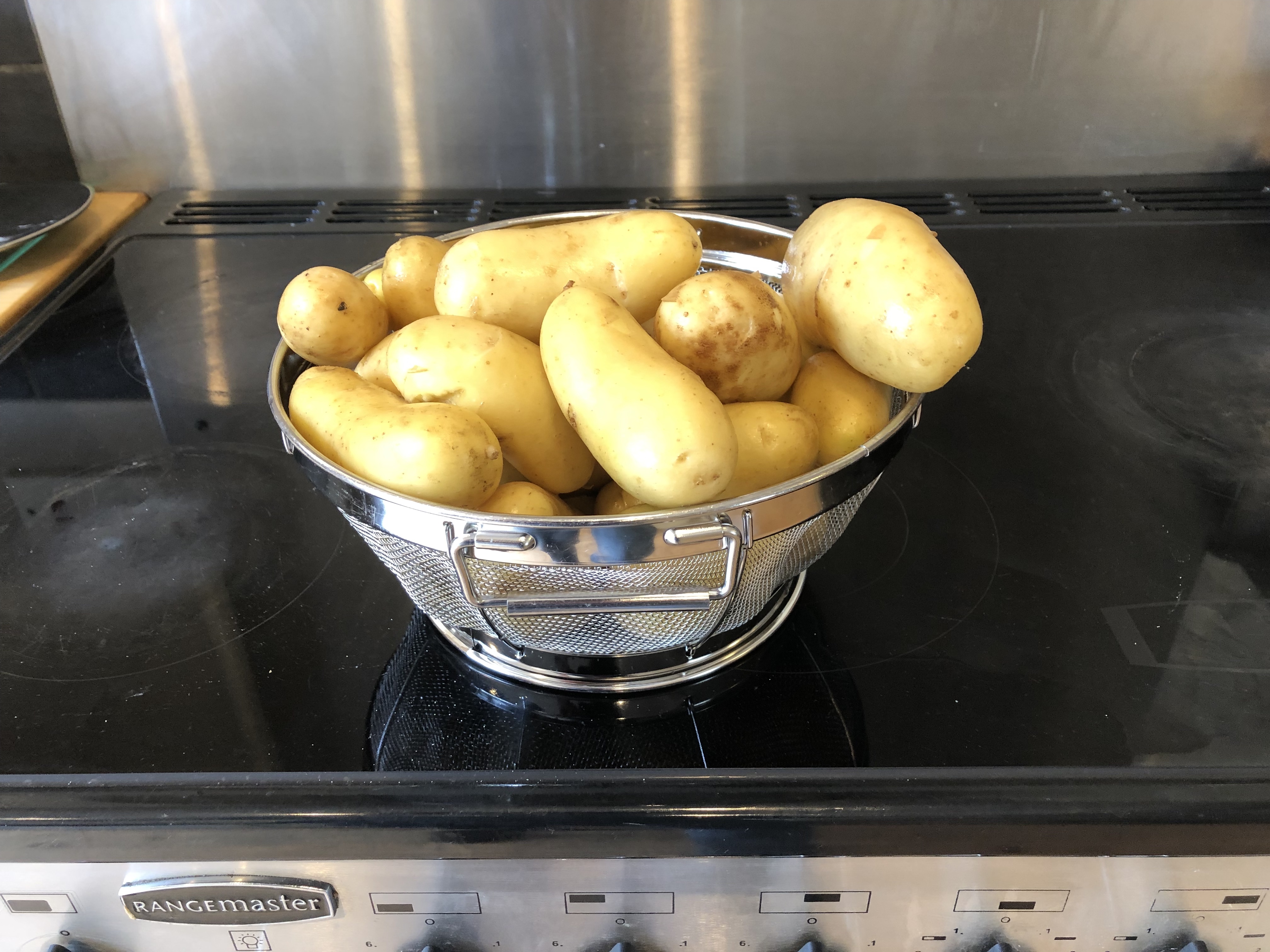
Potatoes thriving on “shady” plot 73
Two plants’ crop, early July

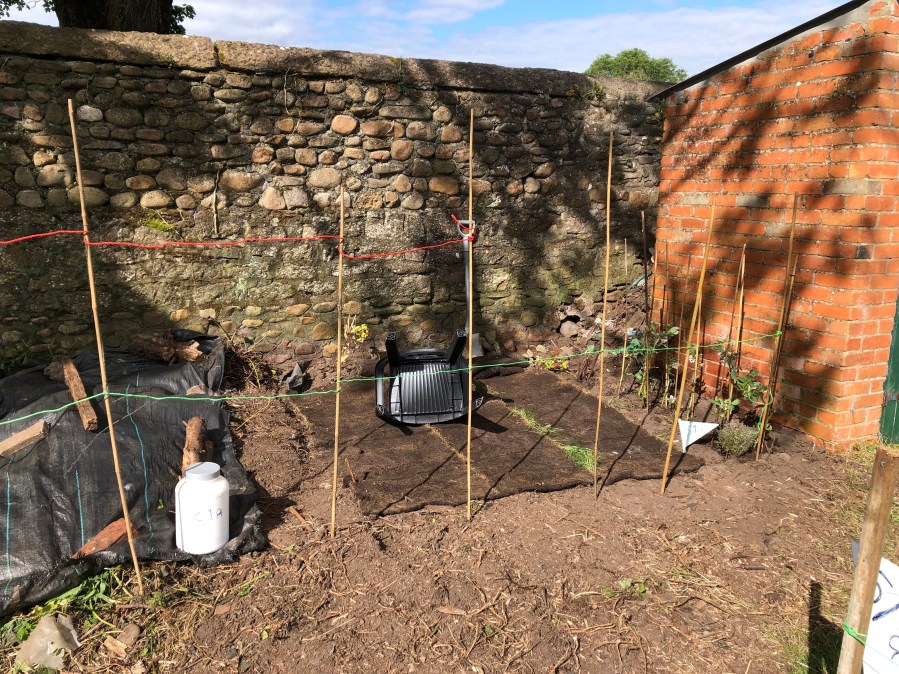
The plots by the wall get full morning sun until about 1100-1200.

Still a little too soon to lift the elephant garlic
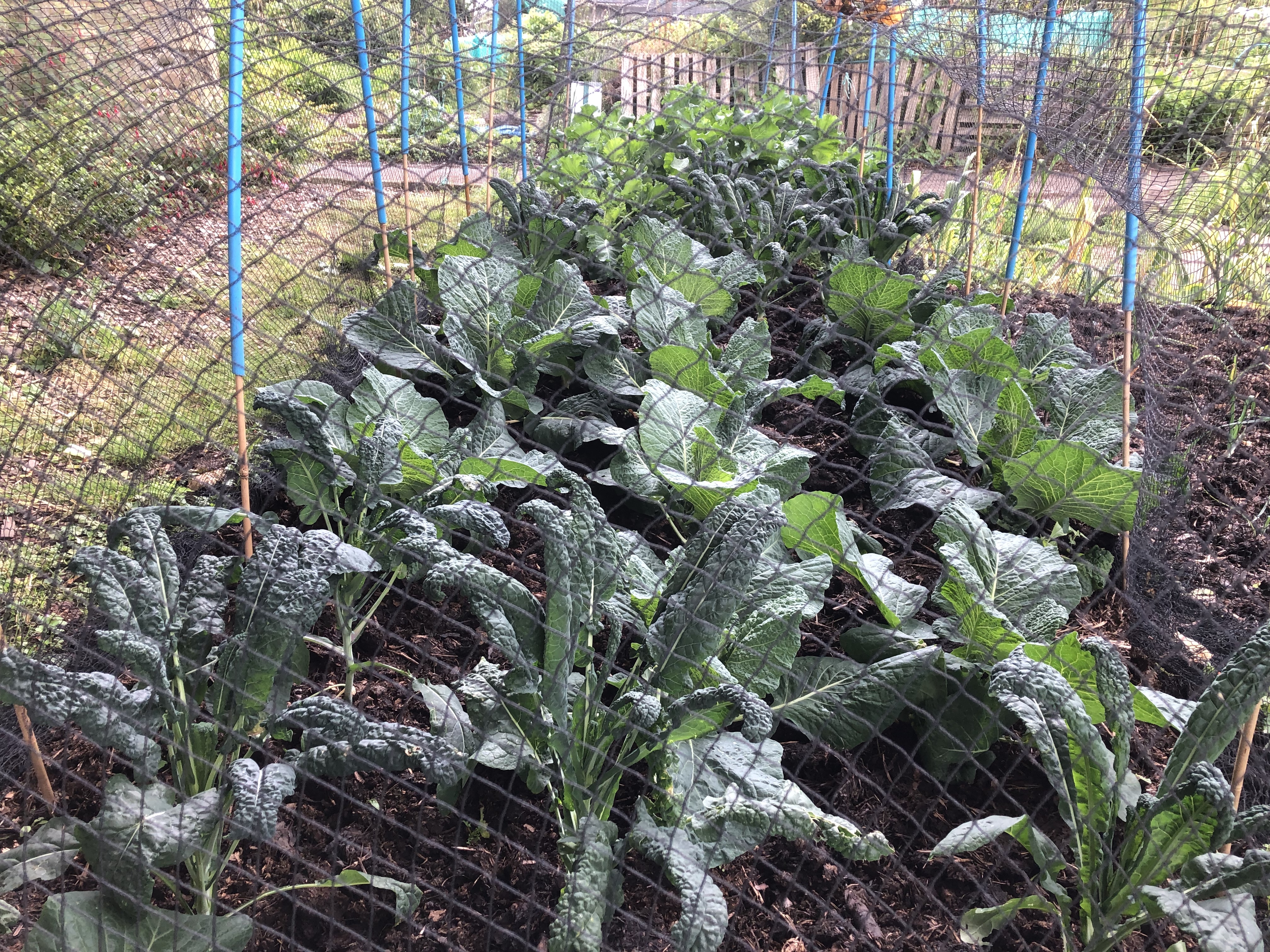
Brassicas – all raised from seed – doing well in a shadier part

Crops such as onions, garlic, and leeks grow during the autumn, winter, and early spring, and so being under large overhanging trees is no problem, as there are no leaves on them for much of that time, and they get plenty of light. Brassicas are shade-tolerant anyway, as are salads.

Plots 51a and 51b are also doing well, although they are better lit, owing to the fall of the previously shading large tree.

Great work

A special mention for the tenants of plot 51a, to whom PPAA are deeply indebted, for their having cleared – at their own expense – the large pile of fly-tipping in this corner of their plot, deposited during its long period of non-occupation.

Plot 52a has only recently been released by the Council for reletting, which should happen fairly soon after clearing.

Plot 52b has been very productively cultivated for years, and continues to be so!

The part of plot 48b which was previously occupied by the huge pile of fly tipping was quickly put to good use by its tenants, and the adjoining part of the cleared site has recently been let.

Plots 71 and 72 are still in the process of restitution, but once this is done, and the plots let, this large project will be complete.

Update: this work is now complete.

PPA Website Team.

Ecology – The Wall, wildlife habitat enhancement planting update, hedge improvements.

PPAA Committee received an email back in February from a plot holder, who was sad to see that the ivy growth on the Heritage Listed wall – “Listed Structure” – had been cut back where it adjoins the tennis courts. As he pointed out, it had been a nesting home for blackbirds and for more besides over a long period, and he wondered why this had been done. An email explaining this was sent to him.

It was resolved to do this at this Committee meeting. However, covid etc. meant that it could only have been addressed more recently. It was also made far more urgent by the fact that during the recent work on the tennis courts, the growth had been removed on that side, leaving the wall badly unbalanced, and in danger of being pulled over (the heavy ivy reached about two metres from the wall in places, with woody stems up to some four inches thick)

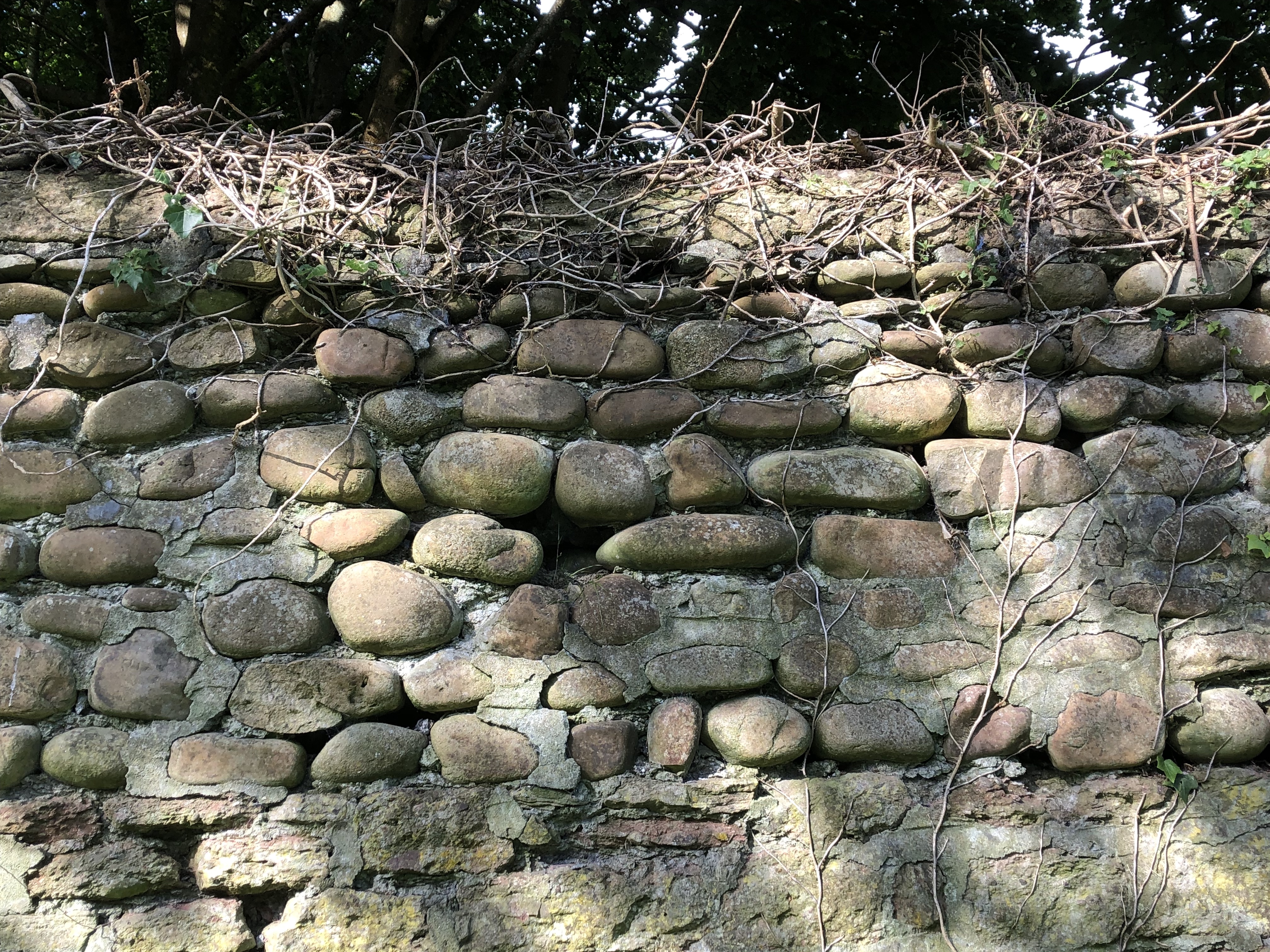
There’s also a general problem with ivy growing on brick masonry or on stonework. The stems and roots will invade any crack however small. As they grow and swell they can exert great force and prise apart the joints, leading to eventual collapse. The pictures below are from our beautiful wall. Most of the culprit had earlier been removed in the damage pictures.

Ivy damage to stonework…
…ivy damage at another location…
…a section of wall in reasonably good condition.

Wildlife habitat enhancement planting update

Committee volunteers have investigated the costs of the small trees and shrubs mentioned in the earlier post on this topic. A burgundy elder ready for planting costs typically £45 from a garden centre, which is rather dear.

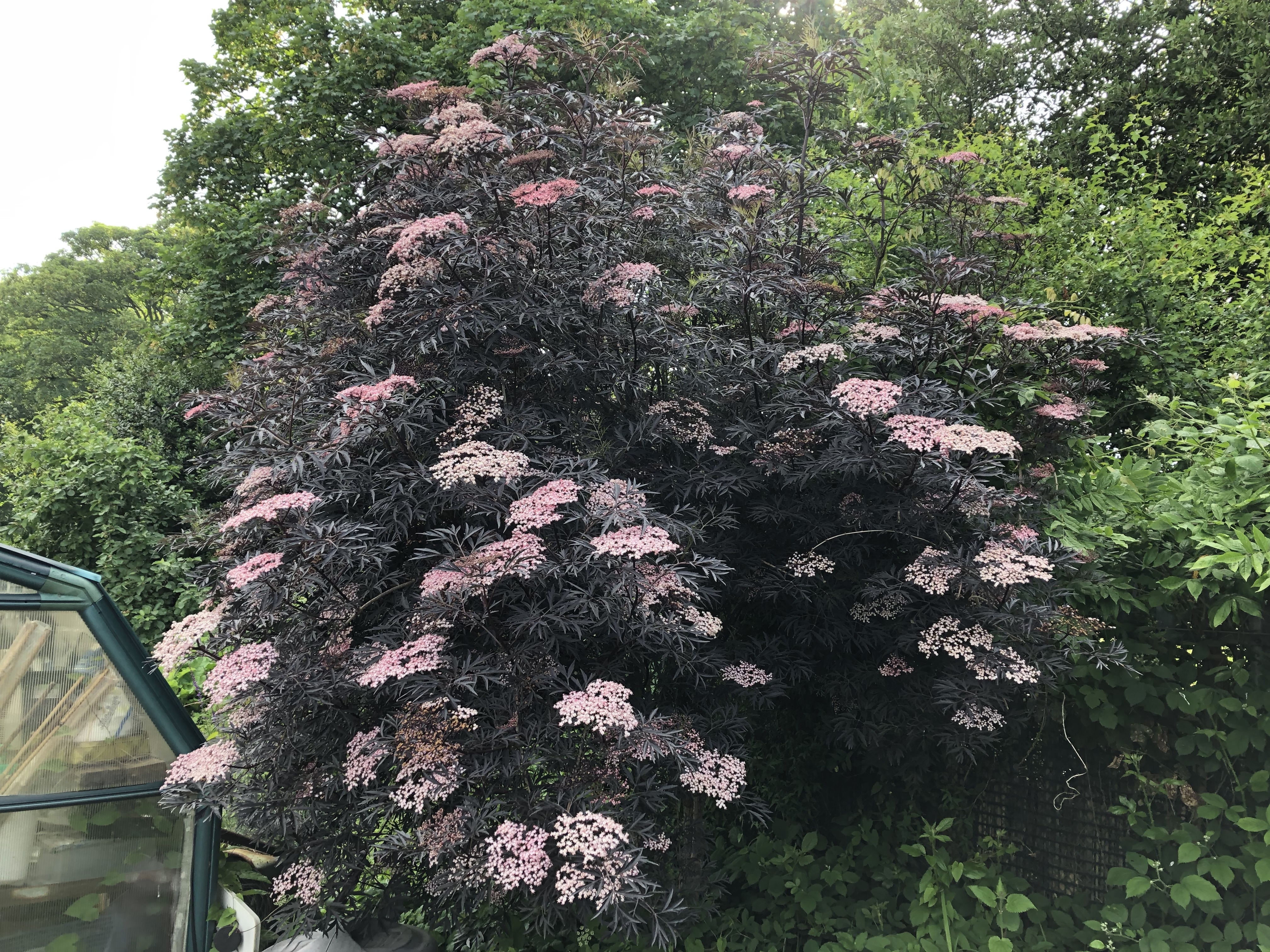
Very fortunately, plot holder Chris Roberts has most kindly said that we can take cuttings from his magnificent sambucus nigra (pictured), which could be grown on in the poly tunnel where the sale plants stand for the moment. Our hardy fuchsias have also started sprouting, just from the prunings in our compost heap, so these should be easy to propagate too.

Chris’s beautiful elder

With luck they should be ready for planting by the end of this growing season. Other suitable shrubs are less expensive to buy.

Hedge improvements

The long hedge by the spine road, for some years, had been unsatisfactory, and ineffective from a security point of view. It’s largely composed of unsuitable subjects such as sycamore and maple. These are very fast growing, and quickly overshadow the better components such as hawthorn and holly. There were sections where these had grown too tall for volunteers to maintain properly, and the hedging beneath, starved of light, had become sparse and weak, and also poor as a resort for nesting birds.

Over the last couple of years, the effects of these problems have been resolved, although the composition of the hedge remains what it was. Winter maintenance has resulted in a hedge of a sensible, even, easily-maintained height, which can more readily be controlled with fewer hours of volunteers’ time. It now gets plenty of light along its entire length – as does the bramble thicket adjoining it in the park – and both have become bushy and vigorous as a result. It’s thickened and become more dense at previously weak points, and we can’t find anywhere along it now where intruders could easily enter.

Previously weak point in hedge

There appear to be many wrens nesting in or by it, and like last year, the trickling song of the black cap warbler is a frequent pleasure to the ear. (At the AGM a plot holder using a mobile ‘phone app* to listen reported twenty-five species of bird’s songs heard in just half-an-hour.)

The statistics for this website show that these topics aren’t nearly as well-read as ones about, say, crime affecting the site etc., but some plot holders feel passionately about them, and to a few others they are apparently paramount.

*The app is called Merlin, and is made by Cornell University in the US as a part of their public participation project.

PPA Website Team

Ongoing shop clearance sale

Sale of legacy PPA Site Shop stock – continuing on line.

More items may be added to this sale in due course – so keep watching!

If anyone wishes to buy any of the below items, then please email the PPAA Committee. The updated quantities left after sales are beneath the pictures.

Hand riddles – compost sifting etc. – two coarse one fine left, £5 each
Pin clips for holding down netting, polythene etc. anti-rust – allegedly – £5 for 50 – still quite a few left.

Bamboo canes

Bundles of 10: 5ft £4.50, 4ft £3.00, 3ft £2.00

Fertiliser sale

Convenient pack size, 4kg, £8, 8 left
5kg tub, £10, 4 left.

Handy bags

The bulk fertilisers below have now been packed in 2kg bags – about the same amount as in a garden centre pack. They’re all £3 each.

Sulphate of ammonia, now in 2kg bags, £3, 9 left. A high nitrogen feed, ideal for brassicas and for promoting green growth on all crops.
Single superphosphate, now in 2kg bags, £3, 32 left. Promotes root growth but also counteracts poor fruiting of e.g. figs, gooseberries caused by excess nitrogen from too much manure etc.

PPA Website Team