It’s a mystery, who organised, or did the repair work – a new towing handle – to the heavy trolley. (We’ll replace the wood before long too.)
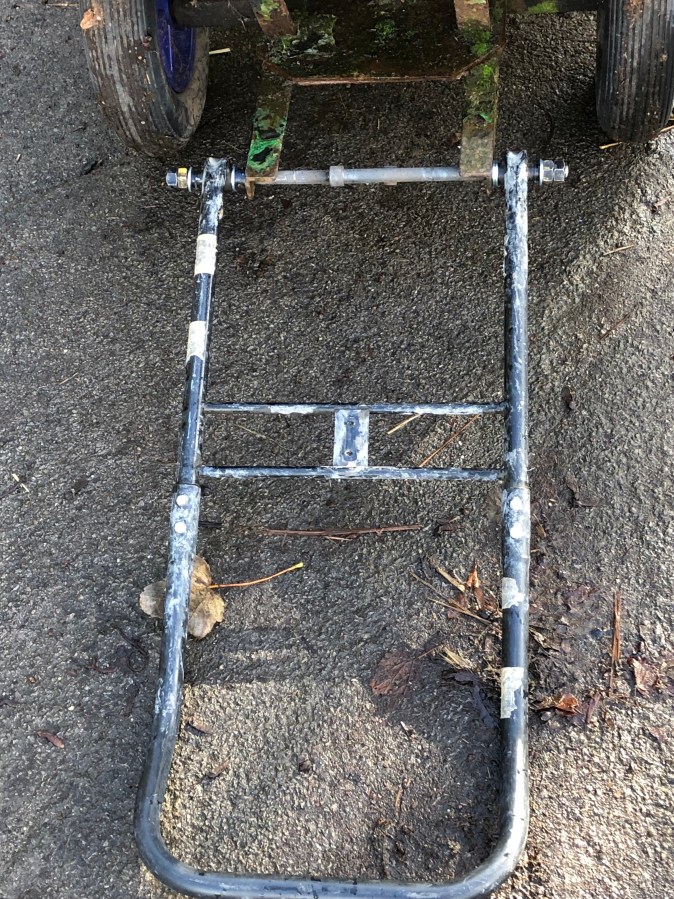
Comments are open, so please step forward, the fine person who made this happen 🙂
PPA Website Team

Pontcanna Permanent Allotments, serving over two hundred Cardiff gardeners, traditional and organic
It’s a mystery, who organised, or did the repair work – a new towing handle – to the heavy trolley. (We’ll replace the wood before long too.)
Comments are open, so please step forward, the fine person who made this happen 🙂
PPA Website Team
At the suggestion of a plot holder, this article has been re-written to make it more readable for people with dyslexia. Further details have also been added.
Happily, most plot holders on PPA enjoy friendly relations with their neighbours. They also have problem free dealings with PPAA Committee, and with the Council, simply by following the terms of their tenancies.
From time to time though, problems will always emerge, which can’t be settled by anything that the sufferer might do or say themselves. So they will turn to others for help.
There are three kinds of wrongs, where something can be done if there’s evidence:
If a plot holder should be the victim of a crime (for instance if tools, produce, or something else were stolen from their plot), then they would need evidence of that crime. If they had that, then it would be up to them to report it to the police. PPAA Committee have found that the police won’t usually act on someone else’s reporting it for them. For one thing, the police would likely see that as hearsay, and that isn’t admissible in Court. However, if the plot holder were to report it, then it would be helpful to everyone on the site if they also informed PPAA Committee, so that any due warnings could be announced.
All that said, if it were to be a plot holder, and not an intruder, who committed a crime on site, then they would also be seriously in breach of the allotments rules. So if anyone were to have reliable evidence of such a thing, then besides the police, they should also notify the Council and PPAA Committee.
If the police took the matter seriously, and issued a crime number, and especially if the offender were convicted, then the Council could be in a position to end their tenancy.
A plot holder might have a reason to take action against another under civil law, over something wrong, but which wasn’t a police matter because it wasn’t a crime. (Say, someone had posted damaging lies about them on social media.) Again, it would be their responsibility to take the needed legal action, usually by hiring a lawyer to take up the case. They would need to convince him or her that the facts were as they claimed too. Without other complications, this also wouldn’t be the concern of either PPAA Committee or the Council.
A plot holder could be caused problems by another tenant’s breaking the rules of tenancy, say by the growing of tall trees causing shading nuisance. If the plot holders between themselves can’t settle things, then the matter should be brought to the attention of the Council’s Allotments Officer. This is because the Tenancy Agreement is between the tenant and the Council, and not with PPAA Committee.
(A plot holder could also have grounds to complain to the Council, if they had evidence that a Committee member had intentionally broken the terms of a Local Management Agreement for the site, say by the occupation of plots, off the record, for their own purposes.)
Plot holders should know, that if an accusation to the Council should be made against any plot holder by another, then the following would be likely to happen:
It would be unfair for the Council to do anything else, as no one would then be given the chance to defend themselves against any anonymous claim, whether it were groundless or not. However, this would be subject to due concern for the safety and well-being of the person complaining.
(Some might remember, that at the 2024 AGM, a person claimed to represent six people, who insisted on remaining anonymous. We were told that they had accusations against Committee members, but that they didn’t want the nature of those claims to be shared either. However, Allotments Officer’s then Line Manager, Anthony Thomas, spoke a little later, by ‘phone, with a Committee member. He said that no record of any accusation(s), against any Committee member(s), made by that person could be found. Whether or not that was owing to to the Council’s policy, as set out in the paragraph above, isn’t known.)
So this all boils down to the fact, that unless someone’s acts or failures fall into at least one of the three classes above, then there isn’t anything, about which anyone should do anything much, or over which their time need be spent. As an example, someone using pesticides or herbicides, with due care, near but not on an organic gardener’s plot would be such a thing.
PPA Website Team
There’s a backlog of necessary work relating to trees on PPA site. In quite a few cases, trees of a type wrongly planted by plot holders, often many years ago, or self-seeded, have been left to grow, and are now a problem. In some instances it would be unconscionable to expect the current plot holder to remove them, but in others not. There’re also dead or dying trees around the site boundary, and otherwise attractive, landscape feature trees, which now have too many large, low-hanging branches causing excessive shade for nearby plot holders.
PPAA Committee have undertaken to begin a programme of works to resolve these difficulties. Volunteers have been able to remove smaller trees and saplings on plots as they’ve become vacant, or where a plot holder had agreed that a given tree needed to go and asked for help to remove it, but the scale of some of the work clearly requires the attention of a professional contractor.
PPAA have broken down the work into classes, and the first one envisaged to be undertaken would be the removal of the most troublesome low-hanging branches of the large trees growing on PPA site beside Road Three, and causing excessive shading to plots 82 to 90. It’s held that the shading can be sufficiently eased without affecting the landscape outline of the trees, none of which – PPAA understand – are subject to Tree Preservation Orders or in a Conservation Area. This will allow PPAA to judge the affordability of the work, and to budget for further classes and extents of work around the site. Plot holders with disallowed trees, that is, excessively large fruit trees, conifer, broadleaf – e.g. oak, ash, bay, hazel, hawthorn – or willow trees on their plots, and who wish to be considered for assistance in their removal, are asked to contact PPAA Committee. (Priority for help is probably likely to be given to plots burdened by larger trees planted or maintained by previous tenants, and depending on demand, the help may have to be rationed, so a reply may not be given for a while.)
Trees – which should be removed – will, from now on, be noted as a matter of course during plot inspections in any case, and the relevant plot holders notified of the need for their removal.
PPA Website Team
Present: Sue Pasek (Acting Chair), Wendy Gunter, Mike Powell, Jane Davies, Martin Pasek, Keith Ball
Apologies: Gordon Goldsmith, Nerys Lloyd Pierce, Lewis Evans
The meeting opened at 19:00
Previous Minutes:
Matters covered below
Chairman’s Report:
Covered by Site Secretary report
Site Secretary’s report (shared role):
Sue reported that during September three plots were let, one plot declined, with two remaining lettable vacant plots. Plot viewings are ongoing.
Two applications have been approved for structures.
The sale of Autumn planting garlic and onions had been a success with all of the stock sold within ten days.
Treasurer’s report: Wendy
Funds remain healthy with no substantial expenditures yet this financial year. However planned projects by the PPAA in the next few months will see a larger spend.
Trees: Mike
Mike has obtained a quote for phase one of tree works on the site. Waste to be chipped and left on site, likewise any logs. The rate was approved by the Committee and dates for phase one of works will be organised. A website article will discuss the planned works in more depth.
Water: Martin
The Council have now raised a ticket for repairs to the mains water leak. No dates have yet been given for this work.
The PPAA Committee agreed that the site water would be turned off for the winter months on the 1st of November 2024.
Manure: Wendy
Wendy has spoken with the Riding School Manager (many thanks to Nerys for making the initial contact) and continuation of supply confirmed. The PPAA Committee voted to continue to offer a financial token of goodwill on delivery.
Complaints Procedures: Wendy
It was considered that a reminder to plot holders of how to deal with both criminal and civil complaints by plot holders – and with grievances under the rules of tenancy – should be made, and a concise article on this subject is expected to be published on the PPA website in the near future.
With respect to the large number of possible miscellaneous breaches of tenancy by a plot holder, Wendy suggested that a generic letter, stating the issue be sent from the Committee, and only if that failed to rectify the situation would the matter be referred to the Council. (A draft is to be presented at the next meeting.)
AOB:
Mike wanted to remind plot holders that there is a works party to clear plot 112b on Thursday 15th October, 10:00. All welcome, and any help gratefully received.
Mike asked for an update on the nine plots issued with End of Tenancy letters by the Council on August the 1st. Sue reported that she had written to the Allotments Officer asking for a status update but at the time of the meeting had not received a reply.
Wendy requested that plot holders bringing cars on site use the allocated parking areas. Parking on the access roads is only for unloading and loading.
There was no further business and the meeting ended at 20:10.
The PPAA Committee meetings are regularly scheduled for the first Tuesday in the month, the next being on 5th November 2024, at 1900, at the Butcher’s Arms, Canton.
It’s been noted during tests, that because the site is on a gentle slope, when the water is turned off, and troughs at the bottom tend to refill, this causes back-suction into the system via the leak and may draw groundwater into the pipework.
For this reason, water taken directly from any trough float valve is not drinking water.
Tests carried out by volunteers have narrowed down the deduced position of the leak to a short section of pipe, and the Council have been informed of this. Accordingly, we hope that repairs happen soon.
Update: PPAA have now heard that Allotments Officer has raised a ticket for repairs, and a contractor is expected to contact soon. It’s also been confirmed that a proportion of the logged wastage was attributable to an issue at the old bowling green, which is fed by the same meter.
PPA Website Team

As Cardiff Council’s Allotments Page says, and mentioned in February’s article on this topic:-
“Carpet, tyres, PVC windows and doors, asbestos sheeting and household waste are restricted items and should not be brought onto any allotment sites. You can get rid of these items at a recycling centre.“
The Council also say that AstroTurf is covered by this restriction, and all would appear to come under Clause 27 of our Tenancy Agreements:-
“27. The tenant must at all times observe and comply with all enactments, Statutory Instruments or bye laws affecting the allotment.”
There’re quite a few plots on PPA with this stuff still on them, and it all needs to go as soon as reasonably possible. Fortunately, Lamby Way household waste and recycling centre will take – we’re informed – “multiple” tyres at any one time* per household free of charge, and there’s effectively no limit on things such as old carpet. Other centres will take things other than tyres. However, please, no one be tempted to fly tip anywhere on site.
Some well-intentioned people brought some of this onto site in the belief that they were usefully “upcycling” waste, but research has shown that as e.g. tyre rubber and synthetic carpet decay or break down, they pollute the soil with nanoparticles etc., and no plot with them on can be claimed to be organically-gardened either.
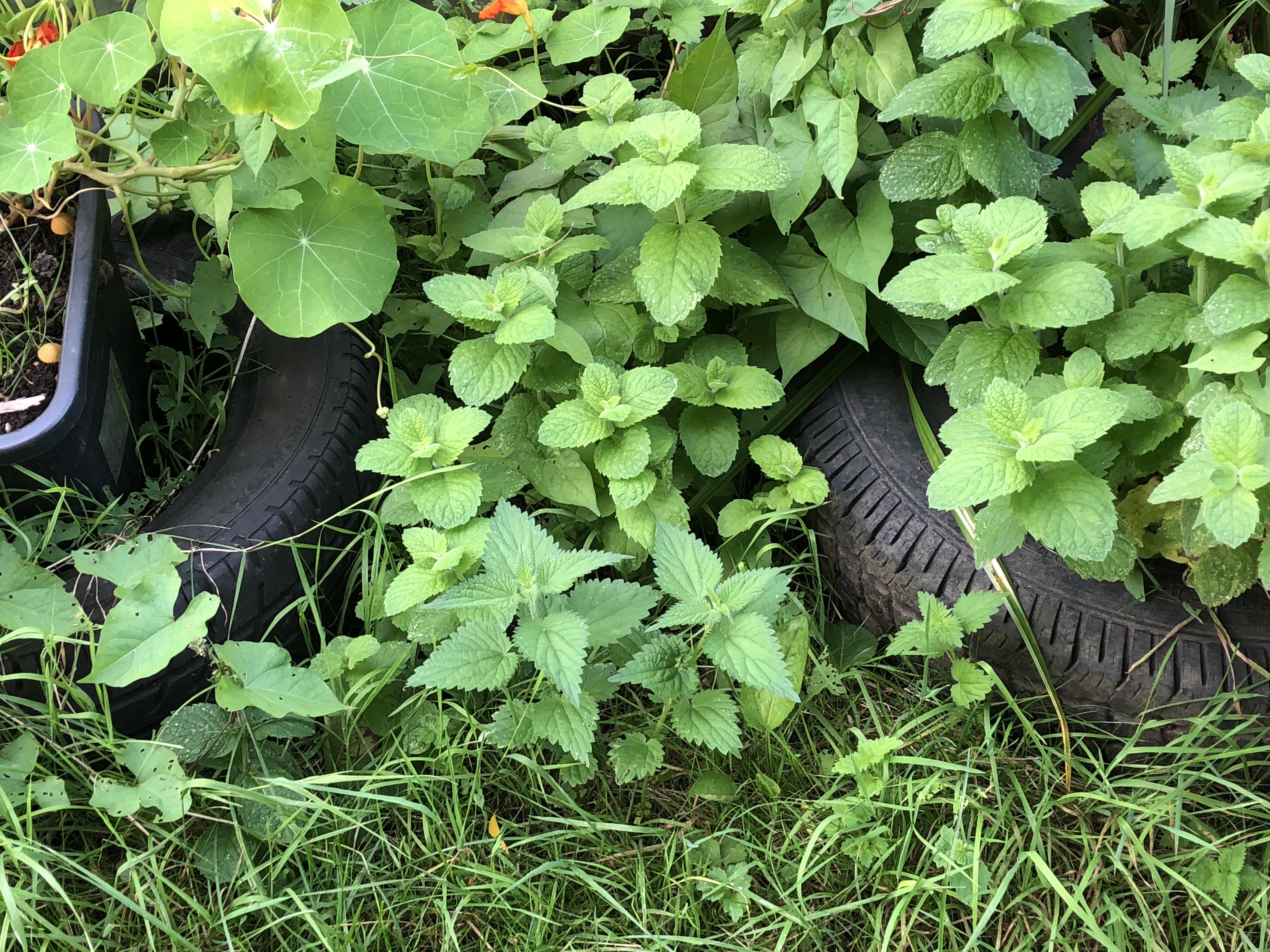
*C-to-C ask that tyres be brought to Lamby Way centre in a car – pedestrian and cycle access is not permitted. The staff there say that as long as it’s clear that the tyre disposal isn’t part of a commercial operation, they may take up to six tyres per household, on an allotted visit.
PPA Website Team
Present: Sue Pasek (Acting Chair), Mike Powell, Jane Davies, Martin Pasek, Keith Ball
Apologies: Wendy Gunter (Treasurer), Rhys Williams, Gordon Goldsmith. Nerys Lloyd-Pierce, Lewis Evans
The meeting opened at 19:00
Previous Minutes:
Matters covered below
Chairman’s Report:
Covered below
Site Secretary’s report (shared role):
Sue reported that there are currently six vacant plots. Plot viewings were zero during August, due to lack of availability and some ongoing clearing works. There have been four structure applications approved.
Clean or Quit Process: This four-stage Council-dictated process has been ongoing since June. The 15 plots previously issued with Non Cultivation Notices in July were revisited after the stipulated 28 days, and consequently the PPA requested that the Council issue 9 ‘Terminations of Tenancy’ notices. This was done on the 1st of September, and the recipients had 28 days to appeal to the Council. The PPA await an update from the Council on progress. The Chair thanked the Plot Inspection Team for their work in following through this process.
Orkastrate: In August Sue attended the bi-monthly Site Representatives Meeting held by the Parks Department. The new computer management programme (Orkastrate) is expected to be piloted with sites in October, but as of this time no “going live’ date has been announced. While this is ongoing all of the Cardiff Allotments waiting lists remain closed. (The system is to manage waiting lists, lettings, plot holder details and so on.)
Fly-tipping: Some plot holders have complained of neighbouring plot holders fly tipping on to their plots. The PPA would like to remind everyone to dispose of rubbish off site.
Treasurer’s Report: Wendy was unable to attend the meeting but had stated that there was nothing to report.
Trees: Mike had emailed the Council re dying or dead trees on the site boundaries, but had only received an automated reply.
Quotes are currently being sought for work on other trees on site.
Allotments Terms, Conditions, Fees and Charges Workshop: Martin stated that he was to attend the next working group later this month, and that although constructive suggestions for revision have been gathered, a final draft of the new Tenancy Agreement is still some way off.
Water: Whilst the Council investigate the water leak detected on site the water will only be turned on for a few hours a day. The Council have given no time scale as to anticipated repairs.
Manure: The problems now facing the Riding School were discussed, and Nerys had asked for it to be noted in her absence, that she will liaise with a contact there to see what help might be given in this regard.
Wildlife – robins: Nerys (by email) and Jane raised concerns re fewer robin sightings this year. Discussion re the RSPB report of declining numbers countrywide, and various related matters followed. It was also noted that the Committee had previously committed to improving habitats, and this is further covered in a separate article (to be published on the PPA website), along with a fuller account of the meeting’s digressions. In the meantime it was agreed to request that plot holders don’t strim down brambles on the bank adjoining Road Three.
AOB:
Mike proposed a working party to address a heavily overgrown vacant plot, 112b. It was agreed to meet there on Tuesday 15th October at 10:00, all volunteers welcome.
There being no further business, the meeting ended at 19:50.
The PPAA Committee meetings are regularly scheduled for the first Tuesday in the month, the next meeting will be Tuesday 1st October 2024 at 1900, at the Butcher’s Arms, Canton.
(This article doesn’t form part of the Committee minutes, as it perhaps represents digressions beyond the brief given to PPAA under their Local Management Agreement.)
Robins hold a special place in the affections of gardeners, and Nerys wrote to the recent Committee meeting to say “During my ‘citizen science’ project over the years, looking at song thrushes, mistle thrushes, blackbirds and robins on the allotment and nearby areas, I have noticed a significant decline in robins. I usually have a courting pair on plot 44, but not this year. The usual robin(s) following me when I dig, plant etc have been noticeably fewer. This could be part of the national decline highlighted by the RSPB, sadly.
However, robins badly need a helping hand. I would like us, the Committee, to make a concerted effort to provide habitat, and to encourage plot holders to do the same. Many myths prevail among plot holders, for example that all birds nest in trees (yes, really!). This could lead to potential nesting sites being damaged inadvertently. I am happy to do the research into practical and manageable steps we can take. Ditto hedgehogs (the event in Bute Park turned out to be about monitoring ‘hogs’ specifically in that area, rather than generic steps to help them).”
The subject was discussed at the September Committee meeting, and several interesting points were raised.
Sue noted that although there may be somewhat fewer robins, she’s never seen so many wrens as she has of late. Furthermore, wrens are very territorial and competitive like robins are, and have evolved the technique of destroying the eggs in the nests of ground-nesting birds such as robins. Sue suggested that this might be a major factor in the apparent decline on site. As they only usually live for a couple of years, it would be inevitable that no one would see the same pair for many years too.
Martin said that robins follow active gardeners for very good reasons, that is, for the feast of worms, grubs, wood lice etc. that we offer them when we fork or dig soil, turn a compost heap, or hoe weeds. Since a significant proportion of plot holders now claim to be using the No Dig Method – or the “No Gardening And No Food Method” as it appeared to some – it’s hardly surprising that robins don’t bother to visit them. There’s also the chronic problem of neglected plots, and the fact of no gardening at all being done on those.
Jane pointed out that the No Dig Method requires the eradication of weeds before the method is begun, but accepted that it seems that plenty claiming to follow this method omit this fundamental part of the process.
Martin also mentioned that there’s at least one pair of sparrow hawks in the area – these can kill thousands of song birds in a season – as well as a Siamese cat, habitually stalking the site.
Over the Pontcanna Fields and Llandaff Fields area, as a whole, there’s been a dramatic increase in habitat for a range of wildlife, with the return to meadow of previously mown fields, the Council’s moratorium on cutting back bramble thickets – notably those adjoining the hedge running the length of PPA spine road, and along the southern site boundary (these have multiplied several times in size in recent years) – and so on. Nevertheless, the Committee agreed, that if parts of PPA could be managed so as to increase this a bit further, then that could only be beneficial.
As it stands, the group of eight native elders planted by volunteers have established themselves well, and are on the way to providing a hospitable thicket quite quickly. Volunteers also have about sixty young hardy fuchsias (of two varieties), ten or so sambucus nigra (burgundy elder), and about forty hypericum (St. John’s wort). These were all taken as cuttings, so they cost PPAA funds nothing, and they represent those that successfully rooted among the larger number actually taken. It looks like these won’t be large enough to be planted out until late next season, however.
The Committee have a responsibility to maintain hedges, to keep tracks free of overhanging brambles etc., and plot holders are required not to harbour mess which may attract vermin, as well as to keep their plots reasonably free of weeds. Furthermore the new Tenancy Agreement – which we’ll soon all be required to sign – would appear to be very likely far stricter in terms of the extent of non-cultivation that would be accepted on plots. That said, there may well still be some scope to enhance habitat for robins and for other wildlife on PPA, particularly in marginal, non-cultivated parts of the site, and discussions will no doubt continue on this topic – to the extent that perhaps more pressing, immediately plot holder-related matters allow at meetings.
PPA Website Team
It’s harvest time, and many growers will have more than they can eat for the time being.
Sue Waring – on Plot 60 PPA – is a volunteer worker for this charity. They cook free meals on a Wednesday evening, and would be grateful for any spare produce that plot holders might have.
Sue says that those with crops to give can contact her to make arrangements, or just leave it in the greenhouse on Plot 60. However, also to let Sue know if they have done this by the form below, so that she can collect the food before it spoils or is eaten by animals.
To contact Sue by email, please use this form:-
Thank you Sue.
PPA Website Team.
Cardiff Council’s “Understanding The Allotments Rules” guide says that children must be supervised at all times.
For this reason, plot holders are, quite reasonably, not required to make their gardens completely free of any conceivable hazard to children. It’d be unduly onerous to impose this burden upon them too. This wouldn’t, however, excuse any patent recklessness on anyone’s part, naturally.
Typically, there may be improvised structures, using materials such as sharp corrugated metal on plots, or agrichemicals on them. There might be glass cold frames – through which a child could fall.
Additionally, PPAA’s understanding of correspondence received this morning from their insurer is, that if anything should happen to children who went off-plot, then they wouldn’t be covered under its Public Liability insurance. The parents/guardians would be seen as negligent by the insurance company, as the children weren’t supervised – as instructed by the Council.
Parents and grandparents are well-represented on PPAA Committee, and they fully understand that busy parents, especially during the school summer holidays, may find it difficult to tend their gardens without bringing their children with them. However, lately, there’ve been a number of instances of completely unsupervised children ranging the whole site, often on cycles. This, combined with the fact that too many drivers don’t keep to the 5 mph site limit, is a cause for concern. Children have also been seen going behind brick cubicles, where all manner of things might have been fly-tipped, before volunteers could discover and remove them.
There’ve also been reports of minor – non-malicious – incidents of mischief, of just the sort that children might do. (For instance one plot holder said that someone had fiddled with their ornamental and humorous display of second-hand spectacles by a track.)
PPAA empathise fully with parents and grandparents as to the demands of childcare, and at the same time getting on with what needs to be done, but thought that it was timely to publish this post. However, they also wholeheartedly support educating kids, as to what’s involved in producing our food, and perhaps – we’d all hope – inspiring future gardeners.
Happy gardening – and family life – to all!
PPA Website Team
The apparatus installed on PPA site last spring turned out to be very useful and helpful, and led to PPAA’s being able to report serious offences, along with evidence identifying the offenders. They were also able to address specific acts, such as fly-tipping by identifiable plot holders. Furthermore, some plot holders who’d been the victims of persistent vexatious interference with their plots noted that this had also stopped during this time.
Sadly, but perhaps predictably, that apparatus itself has now been stolen, and – equally dismally – some plot holders report a resumption of disturbance to their plots. Fortunately the devices weren’t greatly expensive, but nonetheless such offences are a very unwelcome nuisance.
Given the possible implications of these facts, from now, on neither the nature nor the siting of surveillance equipment will be announced, and these’ll likely often be discreet and vary.
There’re adequate notices outside the gates and around the site to comply with e.g. privacy laws in these things.
PPA Website Team


