
PPAA Committee received an email back in February from a plot holder, who was sad to see that the ivy growth on the Heritage Listed wall – “Listed Structure” – had been cut back where it adjoins the tennis courts. As he pointed out, it had been a nesting home for blackbirds and for more besides over a long period, and he wondered why this had been done. An email explaining this was sent to him.
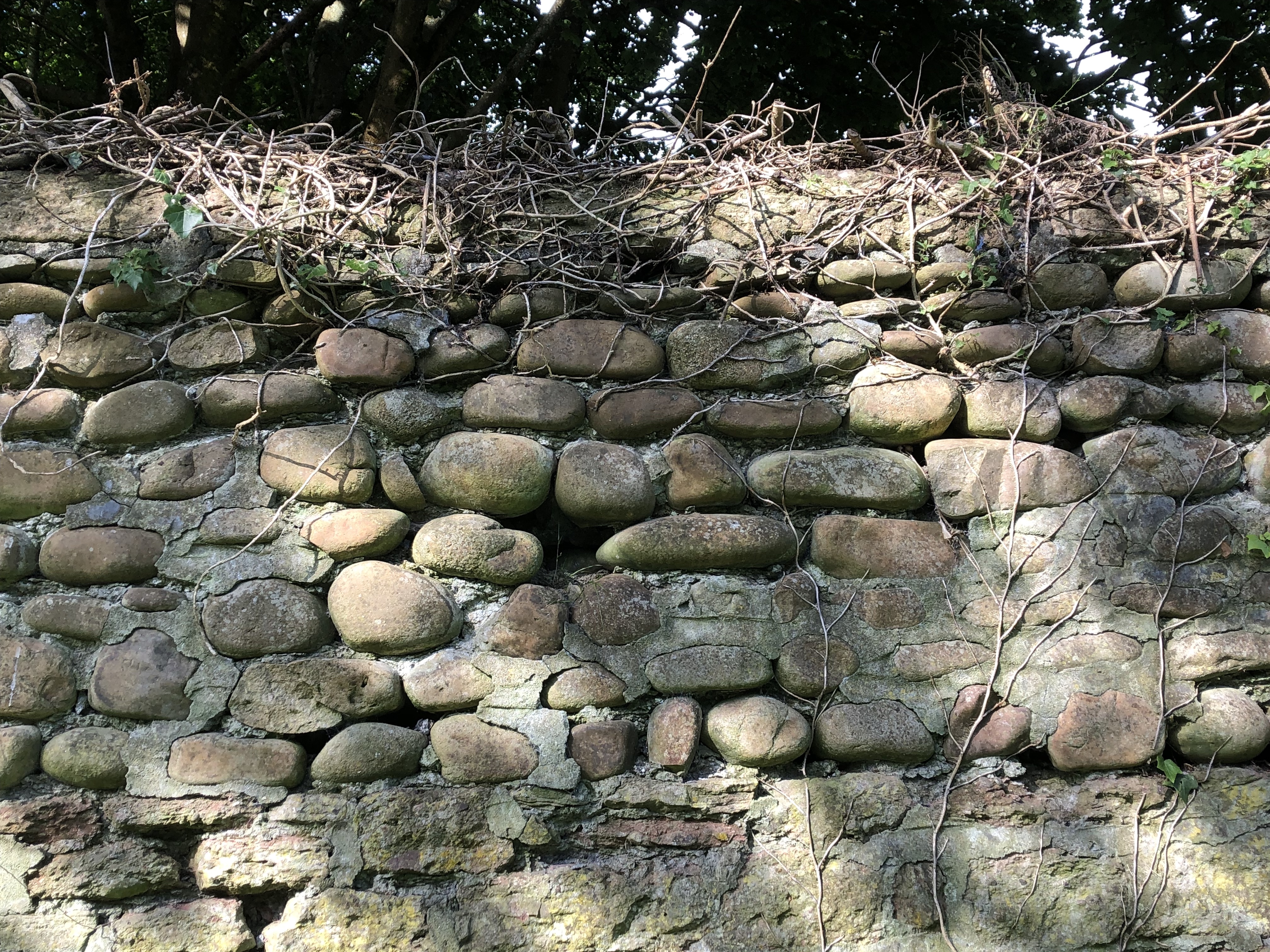
It was resolved to do this at this Committee meeting. However, covid etc. meant that it could only have been addressed more recently. It was also made far more urgent by the fact that during the recent work on the tennis courts, the growth had been removed on that side, leaving the wall badly unbalanced, and in danger of being pulled over (the heavy ivy reached about two metres from the wall in places, with woody stems up to some four inches thick)
There’s also a general problem with ivy growing on brick masonry or on stonework. The stems and roots will invade any crack however small. As they grow and swell they can exert great force and prise apart the joints, leading to eventual collapse. The pictures below are from our beautiful wall. Most of the culprit had earlier been removed in the damage pictures.


Wildlife habitat enhancement planting update
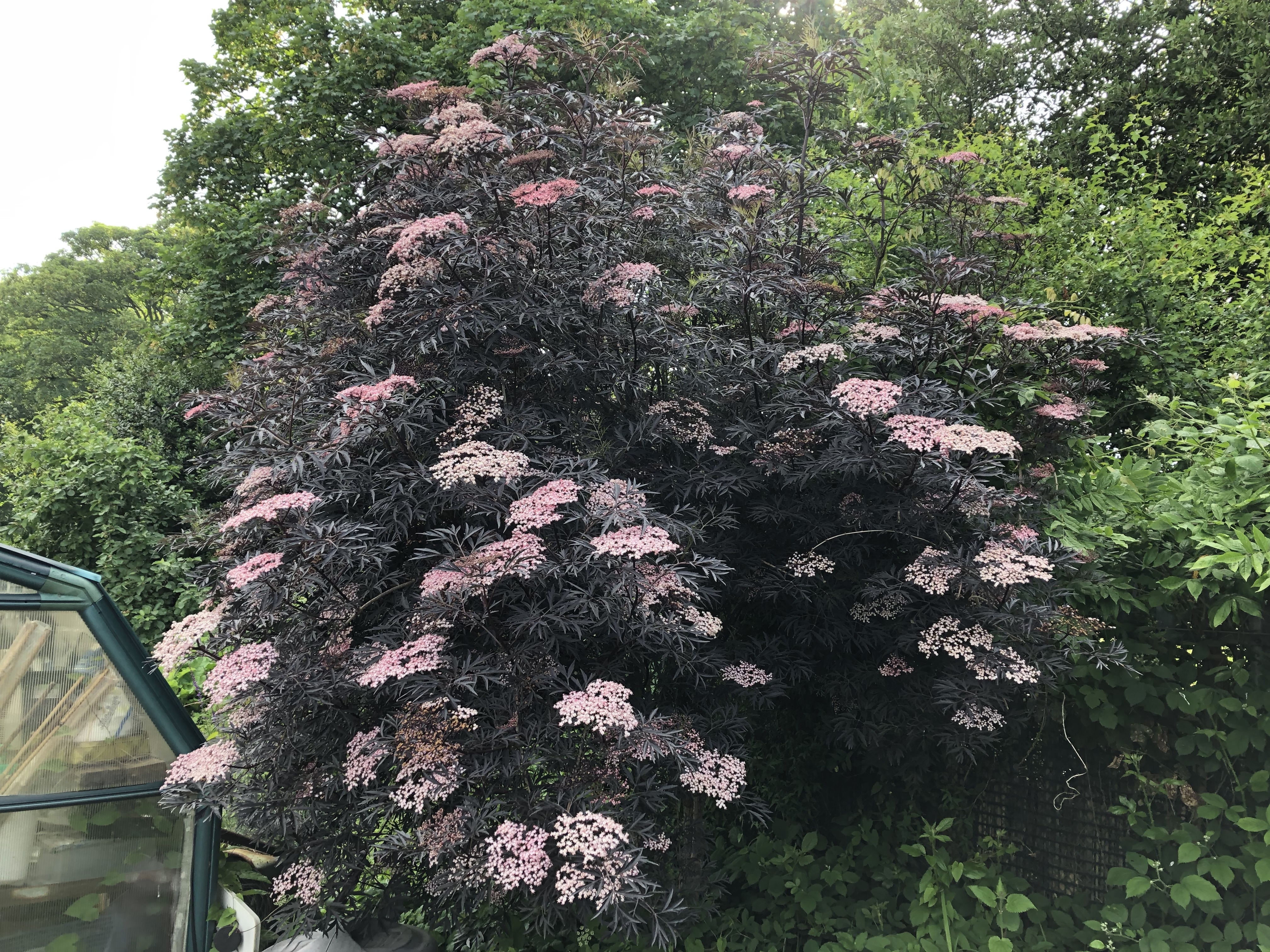
Committee volunteers have investigated the costs of the small trees and shrubs mentioned in the earlier post on this topic. A burgundy elder ready for planting costs typically £45 from a garden centre, which is rather dear.
Very fortunately, plot holder Chris Roberts has most kindly said that we can take cuttings from his magnificent sambucus nigra (pictured), which could be grown on in the poly tunnel where the sale plants stand for the moment. Our hardy fuchsias have also started sprouting, just from the prunings in our compost heap, so these should be easy to propagate too.
With luck they should be ready for planting by the end of this growing season. Other suitable shrubs are less expensive to buy.
Hedge improvements
The long hedge by the spine road, for some years, had been unsatisfactory, and ineffective from a security point of view. It’s largely composed of unsuitable subjects such as sycamore and maple. These are very fast growing, and quickly overshadow the better components such as hawthorn and holly. There were sections where these had grown too tall for volunteers to maintain properly, and the hedging beneath, starved of light, had become sparse and weak, and also poor as a resort for nesting birds.
Over the last couple of years, the effects of these problems have been resolved, although the composition of the hedge remains what it was. Winter maintenance has resulted in a hedge of a sensible, even, easily-maintained height, which can more readily be controlled with fewer hours of volunteers’ time. It now gets plenty of light along its entire length – as does the bramble thicket adjoining it in the park – and both have become bushy and vigorous as a result. It’s thickened and become more dense at previously weak points, and we can’t find anywhere along it now where intruders could easily enter.

There appear to be many wrens nesting in or by it, and like last year, the trickling song of the black cap warbler is a frequent pleasure to the ear. (At the AGM a plot holder using a mobile ‘phone app* to listen reported twenty-five species of bird’s songs heard in just half-an-hour.)
The statistics for this website show that these topics aren’t nearly as well-read as ones about, say, crime affecting the site etc., but some plot holders feel passionately about them, and to a few others they are apparently paramount.
*The app is called Merlin, and is made by Cornell University in the US as a part of their public participation project.
PPA Website Team
