Articles

New Tenancy Agreements for us all.

For several months now, the Council have been convening a Working Group to draft a new Tenancy Agreement for all Cardiff allotment plot holders, and also to review fees, charges, concessions and so on. (A PPAA Committee member’s been delegated to that group, which consists of Head Of Parks, Allotments Officer and other relevant Council officers, and Site Reps or delegates. The last include representatives from The National Allotment Association, and from Cardiff Allotment Holders’ Association, CAHA.)

The draft’s being finalised now, and it’ll soon be the subject of general consultation as required by law. The expectation’s for tenants to be asked to sign it for the year starting in February 2027, which allows for the year’s notice needed. The Group weren’t unanimous on all the changes, but where there was a general consensus and the change was supported by allotments law it was usually incorporated. Obviously, no one can be compelled to sign, but if they choose not to do so, then – as the Council a bit flatly perhaps put it – their existing tenancy will just end.

There’re quite a few reasons for which this is being done, but a principal one’s the increasing use of allotment plots for purposes, which are nothing to do with those defined by the Allotments Acts and by other laws. Examples in Cardiff are understood to include:-

  • The fencing off of a plot with a high corrugated iron fence and locking gate, and its use as a builder’s yard.
  • The setting out of trampolines, swings and slides, and use as a children’s play area.
  • The use as a place for slaughtering animals for meat.
  • Storage for junk by hoarders, when they’ve run out of space at home.
  • Use as a private re-wilding area and wildlife reserve.
  • Use as a venue for religious gatherings.
  • Use in the way of a residential garden, i.e. with extensive lawns, patios, chalets, and other such things.
  • The use as a pet cemetery
  • Use as meeting place for rowdy outdoor parties on summer evenings.

The list goes on, unfortunately.

It was considered then, that in important ways, the existing Agreement doesn’t make expressly clear many of the specifics, of what should and shouldn’t be done on allotment plots, and one central purpose of the draft is to address this. So it’s probably only fair to tell everyone as soon as we can, that some of the changes may need work doing by plot holders on PPA to bring their plots into line with the proposed new Agreement.

Apart from making much clearer that things like the above examples are formally prohibited, one particular point that’s intended to change is the clarity of definition of “non-cultivation”, and the conditions for bringing a plot to “full cultivation”, which would also be defined more clearly and rigorously. The draft as seen by PPAA’s delegate envisages areas of plots covered by things such as lawn, weed suppressants like wood chip, scrub vegetation (which may often be euphemistically described as wildlife habitat), and other non-productive areas, as not being eligible for inclusion as part of the “cultivated” total, no matter how neatly they might be maintained. This would mean that changes needed to be made to plots on PPA where e.g. overly-wide paths between small productive beds formed too large a proportion of the plot’s total area.

As delegates pointed out though, rules may be changed, but unless they’re enforced, the effect of so doing would likely be limited. The Council accepted this, and so for their part they say that – in parallel with this – they’ll be reviewing their Enforcement procedures, with the aim of streamlining and ruggedising them.

Our understanding is that the Draft Agreement will be published during the coming spring as part of the Consultation, and that an on-line survey will be available, together with postal contact for those who aren’t contactable by email, so tenants should have a far clearer idea of the proposals at such point. It’s probably a good time to remind all then, of the importance of keeping the Council and PPAA Committee informed of any change of email or postal address.

PPA Website Team

Site security – boundary improvements: Phase One complete.

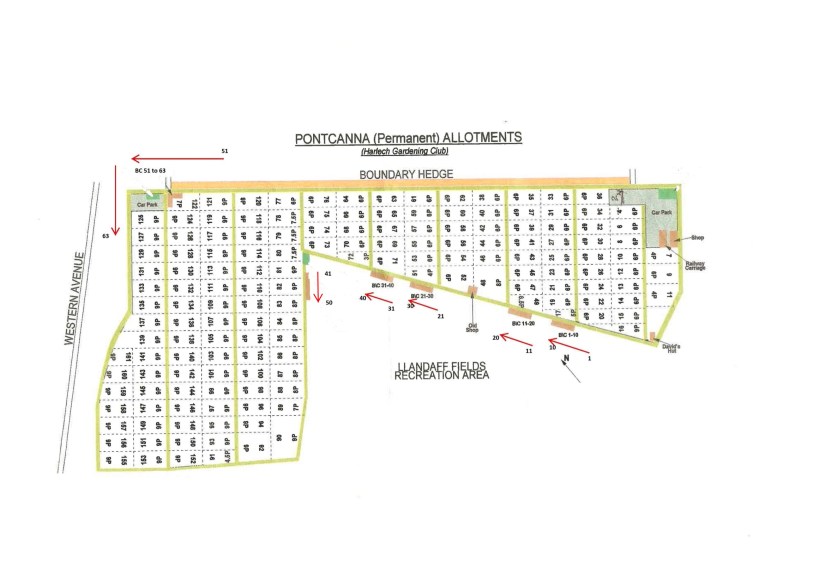
Custom-and-practice working plan of PPA site

As outlined in the last PPAA Committee meeting Minutes, it was proposed to crown lift the mature hawthorns and other trees forming the historic PPA hedge, and to use the pruned material to form a rough-laid, dry hedge, beside the now-dilapidated wire netting fence. This would offer an immediate and major improvement to site security, notably at the point where the criminals, apparently responsible for the recent arson at Riverside Community Gardens, entered.

This would also provide a substrate for brambles and for other useful defensive subjects to colonise, and their growth would be markedly accelerated by the greatly increased light then available to them. Volunteers would also plant further thorny, hedging-suitable items to grow beside this. Although there are already quite a few growing freely, bramble seeds would also be sown along the length of the whole, so as to engender the extension of the impenetrable thicket – presently adjoining about half of the boundary – to reach the full length of the site. An incidental benefit would be the significant enhancement of wildlife habitat in the vicinity too.

This website’s pleased to report then, that the actions described as proposed in the first paragraph are now complete. (There might remain some minor tidying of possibly unsightly sawn stumps to be done, however.)

The volunteers thank the many plot holders who – on encountering the work in progress – have shown understanding over e.g. delays in vehicle movements, or who’ve expressed support and encouragement to the workers involved.

PPA Website Team

PPAA Committee Minutes for 3rd December 2024 meeting, at 1900, Butcher’s Arms, Canton.

Present: Sue Pasek (Acting Chair), Mike Powell, Rhys Williams, Jane Williams, Lewis Evans, Gordon Goldsmith, Nerys Lloyd-Pierce, Martin Pasek, Keith Ball.

Apologies: Wendy Gunter.

The meeting opened at 19:00.

Previous Minutes:

Matters covered below. 

Chairman’s Report:

Matters covered below.

Site Secretary’s report (shared role – given by Sue):

November saw three new plot holders join the PPA. No structure applications were received. Plot viewings are ongoing, with Sue having four booked for early December.

Work by several Committee volunteers has been ongoing to clear large amounts of ‘rubbish’ left on several plots, the cost of removal offsite by a licensed carrier has been paid out of PPAA funds.

In response to the sickening arson attack on the Riverside Community Gardens, the Council Allotments Officer, Celia Hart, met with Sue. Sophie Bolton and Adrian Peters from Cardiff Salad Gardens were unable to attend, however. The fire damage was discussed, and also site security weak spots. The Council have been quick to respond, by providing a team to remove the fire debris and to organise the ‘making safe’ of several fire damaged trees. Discussions between the CSG and the Council are ongoing as to how and when the structure will be rebuilt, with due regard – as required – to planning permission and safety.

Treasurer’s report: Wendy

Owing to ill health Wendy was unable to attend. The Committee extend their best wishes for a speedy recovery to Wendy.

Trees: Mike 

Webbs, the team contracted by the Committee to undertake the planned tree works have postponed the work until the New Year.

The four days work previously agreed by the Committee will be prioritised as listed:

  • Road Three overhanging branches.
  • Vacant plots, and where plot holders have already requested tree clearance.
  • Overhanging branches at the rear of plots alongside the A48 boundary (within fence).
  • It was agreed that plot holders, who have not already done so, but who wish to have trees on their plots brought down should contact the PPAA asap.
  • Nerys and Jane proposed to use some of the waste to make invertebrate habitat piles, in discreet locations about the site (AP Jane, Nerys)

Action: Mike to continue to manage the timeline.

Boundary security improvements: Martin

Martin reported that the arsonists had – to all appearances – entered by a sparse point in the hedge and fence, where the shade of a large tree had restricted the hedge’s growth and vigour.

He proposed that the mature hawthorns and other trees in the historic Boundary Hedge be crown lifted to let in light, which would enable the prolific growth of rewilding – such as brambles and further hawthorns – planted by volunteers. The aim would be to make the dense thorn thicket adjoining the northern part of the fence run the whole length of the site. The brash from the pruning would be used for dry thorny hedge reinforcement or laying, which would give an immediate and major improvement to security.

The Committee approved the purchase of a battery pole pruner for the purpose.

Nerys said that she’d investigate the supply of suitable thorny hedging for planting. Martin said that packets of 1,250 bramble seeds could be bought for £6 a bag.

AP: Mike, Martin, Rhys, Nerys

Bird Boxes: Nerys

Nerys has found a source of robin boxes, with Keith Ball also providing some more. Jane said that she could also obtain some locally made kits. Sue proposed a work party could be advertised for plot holders to help assemble them.

Jane reminded the meeting of the issue of a plot holder’s strimming the undergrowth on the bank by Road three, so disturbing the area used by ground nesting birds such as robins.

Action: Nerys and Gordon to place the boxes when ready. Jane to enquire further re her bird box contact. Jane to place warning notices along the bank.

AOB: 

Jane proposed that a survey by plot holders of birds, butterflies etc. on their plots would be useful. 

Jane also wanted awareness to be raised, as to the harmful effects of some chemicals used by human beings in agriculture on wildlife.

For context, Sue said that current Cardiff Council Allotment policy is that no sites are ‘organic’. Individual plot holders have the right and freedom to garden as they wish, as long as that’s within the rules of tenancy, they respect their neighbours’ gardening styles, and they only used gardening chemicals licensed for sale to the public. Mike pointed out that – in general – potentially harmful chemicals require a licence to purchase. The general consensus was that the use of pesticide sprays on PPA was rare anyway, as no one could report seeing anyone using them.

There was no further business and the meeting ended at 20:00.

The PPAA Committee would like to take this opportunity to wish all of our fellow plot holders a Very Happy Festive Season, and a great growing year in 2025.

PPAA Committee meetings are regularly scheduled for the first Tuesday in the month, the next being on 7th January 2025, at 1900, at the Butcher’s Arms, Canton.


For information – the custom-and-practice working site plan

Tyre disposal at Lamby Way HWRC

Following the recent articles, reminding plot holders that tyres and other polluting items aren’t allowed on allotment sites, a lady tenant reports, that after booking her appointment, she took six tyres in her hatchback to the Household Waste Recycling Centre at Lamby Way. (Click link for map.)

She says that disposal there is very straightforward, with a skip for tyres accessible by car. It’s the furthest one. She did wonder if she’d be allowed to take as many as six, but it appears that the staff there are very reasonable, and unless it seems that it could be a commercial operation trying dispose of its waste for free, they won’t interfere unduly. However, we’d be interested to hear how others get on too.

Whatever, there really doesn’t seem to be any reason to delay the getting rid of these things.

PPA Website Team

Criminals, arsonists enter PPA site

Remains of RCG shelter and meeting room

Once again, for the second time in just a few years, Riverside Community Garden have been targeted by criminals, along with the whole site generally.

For two consecutive nights previously, there had been evidence of intruders, with most people’s sheds having been found opened the next day, but with no reports of serious theft. However, on this occasion they also set fire to the RCG shelter.

Attempts had been made to enter by both gates, with evidence of someone’s trying to saw through the lock’s tenon bolt, but the criminals were defeated by the anti-saw measures in them. It’s a small comfort at least that it seems that they didn’t have a key, and apparently nor did they climb the gate now fitted with barbed wire. Volunteers have, this morning, also replaced the seriously damaged lock.

Attempt to saw lock tenon defeated by anti-saw roller

Having failed to enter by these means, it appears that they dismantled a short section of dry hedging infill, and climbed over the fence at that point. Volunteers have rebuilt it, and this time woven its components together with barbed wire. (The hedge security has been greatly improved where volunteers have removed excessive, overshadowing growth – and the improvement in light has made it much more vigorous and bushy – but there still remain sections where it’s overhung by trees, and consequently relatively sparse.)

Cameras on site did capture images, of apparently two people with torches or wearing head lights, at around 2030 on Saturday evening, but whether these were intruders or police patrol isn’t evident. They weren’t near RCG in any instance.

Two lights

We can only speculate as to what the full motives were for these incidents. Besides the fire, RCG’s banner on the gate was also torn down.

We’re sorry to have to report such things, but careful thought will be given as to how site security could be further improved.

We’re heartened and impressed, by the expressions of support, and materially very valuable offers of help, which have been made on RCG’s FaceBook pages. We wish them a very speedy return to activities as usual.

PPA Website Team

A mystery perhaps explained?

A personal take by an allotment gardener

It’s been frustrating in recent years, for seasoned allotment gardeners to see so many overgrown plots being cleared for letting, only to have them soon neglected by their new tenants, and then left altogether, and for the whole business to start over again.

Having had a good look around the site over quite a while, it seemed that a lot of the ones who didn’t stick at it were younger tenants, and so some of us wondered whether this was maybe down to things like more pressing work and family demands, but then that didn’t really explain the fact of this turning up as a pattern over just the last few years.

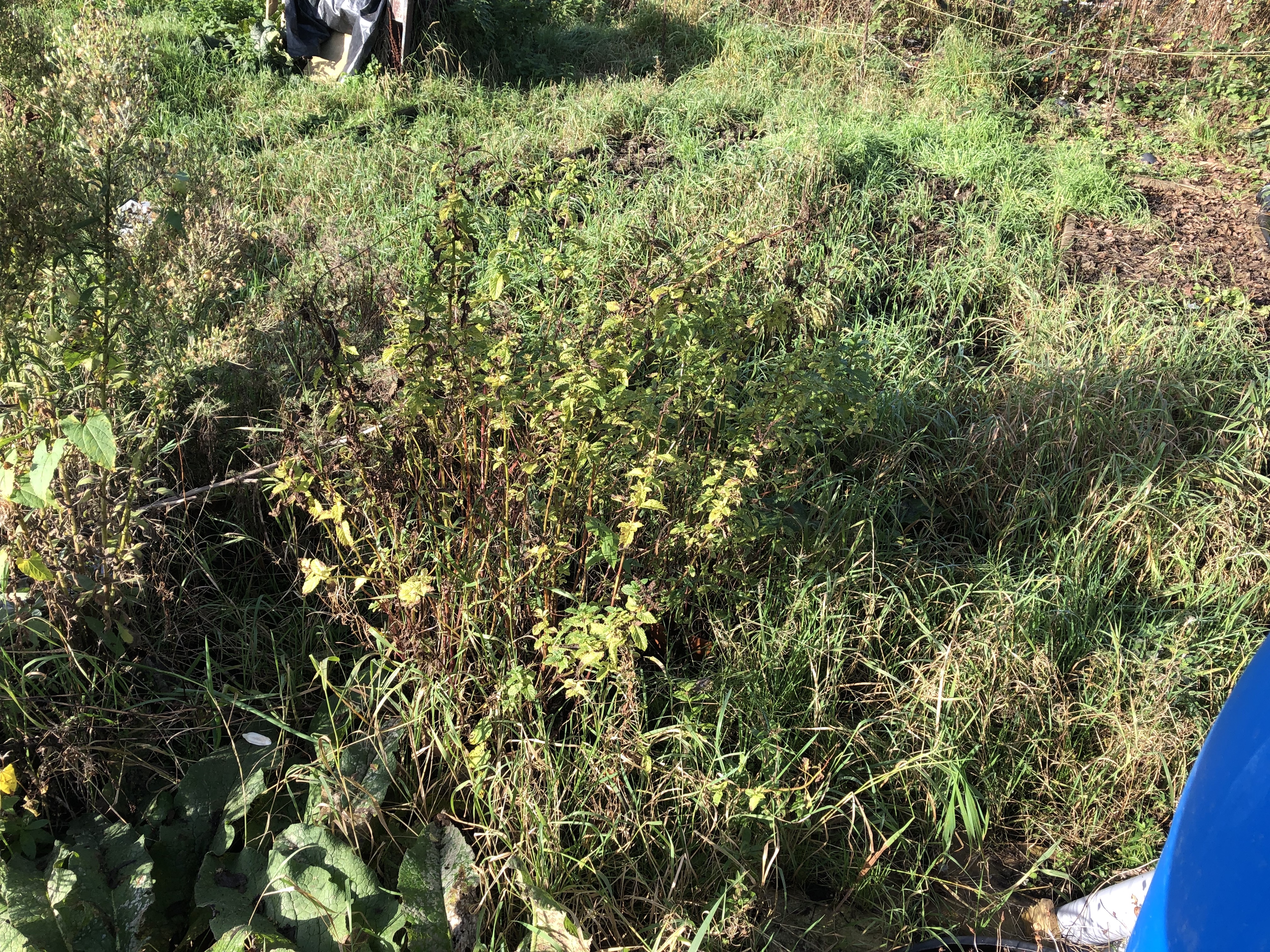
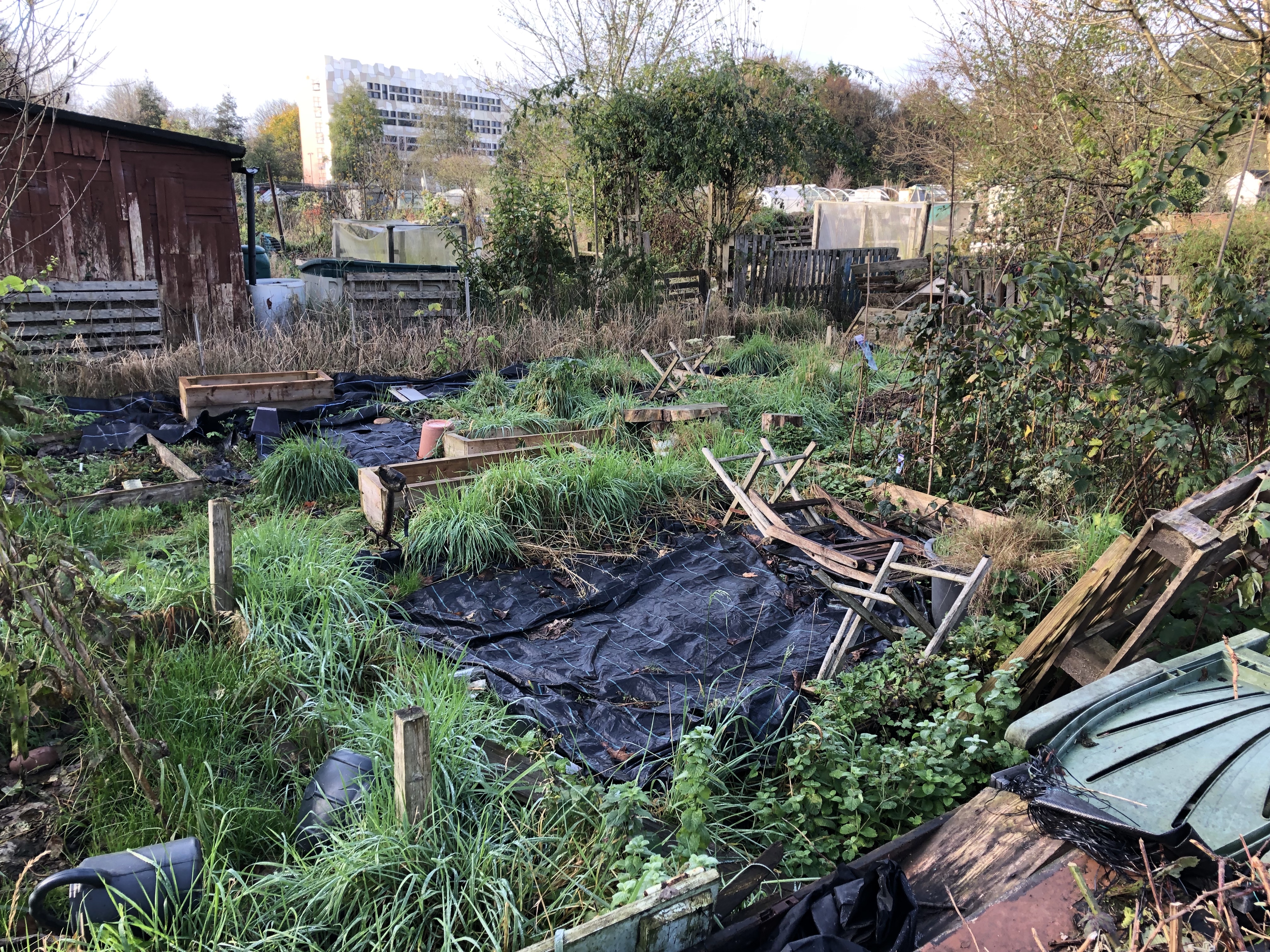
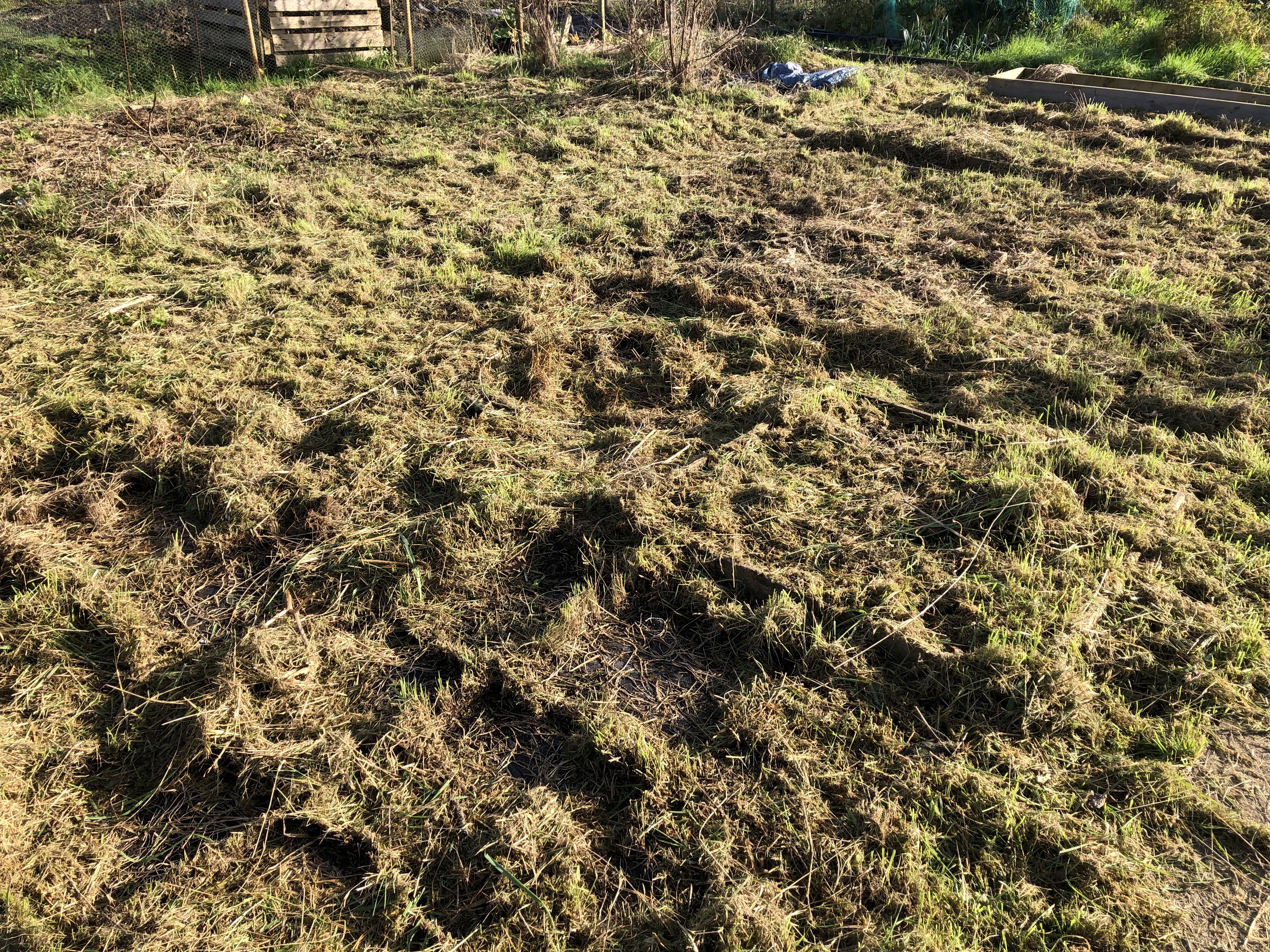
After looking more closely at these plots though, one thing began to stand out. That is, most by far of the failed tenants had been trying to use the recently popular No Dig Method. Below are photos, of seven such struggling or deserted plots. In some of them the remains of the beds are too overgrown to be seen. (There are lots more around the site too.)

So what might have been the problems that put off these gardeners? Well, it could be that those with busy lives thought that they could have a productive allotment, but one which took up less time and energy than one gardened by traditional methods, and all the while make a contribution to safeguarding soil life and so on.

If that were so though, then would their beliefs stand up to cool-headed scrutiny? Or were they perhaps mistaken?

For a start, the raised beds seen involve the work and expense of making wooden frames, but with the damp climate here, untreated (or even “treated”) timber will be doing quite well to last more than a single season. Wood treated with a long life preservative that works – such as creosote – is a health hazard on the other hand, never mind not being organic. So there’s one problem.

Some of the weeds, like couch grass, bindweed, or horsetails, within or outside the beds, can’t be stopped by say, covering with corrugated cardboard, and they’ll force their way through whatever, so the task of weeding hasn’t gone away either. Deep rooted weeds, like hogweed of which there’s a great deal on the site – will also have to be dug out anyway if the gardener wants to avoid herbicides.

Often, the compost with which the beds are filled will have to be bought, and lugged from source to site. This is hard work, and expensive. A full plot would need tons of it, and at around eight pounds per bag this wouldn’t be cost-effective gardening at all.

If the beds are started on unturned soil, then there’ll likely be hardpan, that is, a hard layer of compacted soil beneath it, especially at the parts of the site where there’s clay. Plenty of crops need to put down deep roots, but they might struggle to do so into this, and so they won’t thrive.

Lots of plot holders have used wood chip to stifle weeds on the paths between the beds. This stuff is a real haven for slugs though, and those’ll come out to eat such crops as there might be. If they avoid slug pellets too, and don’t use other methods of dealing with them that actually work, then they’ll be lucky to take much home to eat.

The structure of good natural soil is usually one where near the surface there’s nitrogen-rich (but often mineral-poor) humus, populated by soil life – which feed on this – and as one goes deeper one meets nitrogen-poor (but often mineral-rich) clays and the like, but with little soil life. The whole point of ploughing or digging is to mix these together, to get a good balance of both nitrogen and minerals, as well as to break up the soil so that plant roots can get into it to whatever depth is needed (a long way for potatoes and other root crops.) It’s no great wonder, that humanity has been doing this for thousands of years, then.

The natural soil of PPA is made up of fertile flood plain deposits, and in plenty of places it’ll have been made better still, by generations of gardeners digging, manuring, and liming it. It’d be a happy thing, to see more gardeners reap the rich benefits of that.

On the other hand again, we seem to have some gardeners who do very well using the No Dig Method, but it looks like they’ve put a lot of thought into how they do what they do, and into what they grow. Sometimes they’ve bought the coated metal frames, which don’t rot (or use none at all). They’ve also got rid of strong weeds before building the beds, and they’ve broken up and turned the soil beneath them. They then fill and refill the beds with compost made from the ordinary soil of their plot and its plant waste. That said, this writer’s still left wondering, if all that care in what has to be done in fact needs far more rather than less time and effort on the part of the gardener than does traditional growing?

Car park restitution

Work’s about to begin, in restoring the car park, opposite the three plots rented by Riverside Community Gardens, to a condition suitable for its proper purpose.

This will involve clearing away the accumulation of residues of wood chip, manure, topsoil, compost etc., which have been delivered or stored on it over the years, along with all the weeds and scrub which have colonised that.

We don’t expect this work to take more than a few days. (It’ll be done by hand, by our excellent plot holder Mike.)

UPDATE: the work is now complete, and the car park available for normal use.

PPA Website Team

Non-compliance Notices

This website recently published articles, which touched on the need to remove overgrown or non-permitted trees from plots, and on a like need regarding polluting materials such as tyres.

PPAA Committee thank those plot holders, who’ve been in touch to say that they’ll be taking these matters in hand, or to enquire, as to possible assistance. However, these numbers were small, and represent only a very minor part of the total number of such breaches of tenancy conditions across the site.

To save time therefore, PPAA Committee have approved a standard format Notice, to be sent to plot holders in these and similar instances. There’re a dozen or so plots where such Notices would presently appear to be warranted, but these just happen to be those of which PPAA are aware as it stands, and more will no doubt come to light when formal Plot Inspections begin for 2025 in March. (There’s general agreement across sites in Cardiff, that these Inspections were often happening too late to enable reliable processing by the Council within the prescribed seasonal window.)

These Notices will start to be sent out in the near future, so it’s important that PPAA’s email address not be blocked, nor its messages diverted to a junk folder. If they were missed – and no required action taken – then it’s possible that matters could – otherwise avoidably – be referred to the Council. Tenancy could, in principle, even be lost as a result too.

PPA Website Team

Minutes For PPAA Committee Meeting, 5th November, 2024, At Butcher’s Arms, Canton

Present: Wendy Gunter (Acting Chair), Sue Pasek, Lewis Evans, Nerys Lloyd-Pierce, Martin Pasek, Keith Ball.

Apologies: Gordon Goldsmith, Mike Powell, Jane Williams.

The meeting opened at 19:00.

Previous Minutes:

Matters covered below. 

Chairman’s Report:

Matters covered below.

Site Secretary’s report (shared role):

During October Sue has welcomed, on behalf of the PPAA, five new plot holders. Five more plots will soon to be ready for viewing, with another five requiring more work. No structure applications have been received.

The works party to clear plot 112b went ahead. Four Committee members and one plot holder spent a morning clearing the dense bramble overgrowth. Many thanks to plot holder Mandy for lending a hand.

Treasurer’s report: Wendy

There were no large spends in October. However, the planned Phase One of the tree works in November will see a larger expenditure than average.

Trees: Mike 

Mike was unable to attend, but confirmed that the Phase One of the tree works were anticipated to start in the second half of the month.

Water: Martin

The site water has now been turned off for the winter.

Martin reported that there has been no further update from the Council re a date for the water leak repairs, although the matter remains in hand.

Manure and wood chippings: Wendy

Manure was delivered during October to both ends of the site’s pens. Wendy and the Riding School Manager agreed that notice would be given to the PPAA to co-ordinate future deliveries. PPAA made a gratuity payment of £60 for the recent one. Many thanks to CRS.

There have also been a number of substantial deliveries of wood chippings by the Council’s arborists, for which PPAA express thanks to the workers who made them.

Polytunnel: Sue

The six beds on the righthand side of the communal poly tunnel will be available from February 2025. Applications to enter the draw will be invited, and more information about these beds will be available in December

Notification procedure for tenancy breaches: Wendy, Martin

A draft of a generic letter – as proposed at the last meeting – to notify tenants of any breaches of their Agreement was presented to the Committee, and accepted without objection. A list – not comprehensive – of several reported cases where such a notice would likely be warranted was also accepted.

AOB: 

Nerys outlined suggestions made in a report by The Gwent Wildlife Trust, with particular reference to supporting robins, blackbirds, and hedgehogs, and there was a discussion based on these.

Action: Nerys to audit bird boxes, types, and condition around site, and if needed, purchase more. Wendy, Treasurer agreed for PPAA to meet the costs.

Wendy also reported a suggestion made by a plot holder, that PPAA should purchase a wood chipper, for hire to plot holders. However, the Committee have been constrained to have a “no equipment hire” position for several years, owing to H&S and insurance issues, and also to a shortage of volunteer effort. It was therefore considered that this position should remain for the time being.

There was no further business and the meeting ended at 20:15.

The PPAA Committee meetings are regularly scheduled for the first Tuesday in the month, the next being on 3rd December 2024, at 1900, at the Butcher’s Arms, Canton.