Articles

Annual poly tunnel bed draw

The PPAA communal poly tunnel, at the southeast end of site, has twelve beds, of several square metres each, for the use of tenants. They’re filled with Council compost, and this may have been supplemented by their gardeners.

Each of these is available for two continuous seasons (that is, two whole growing years), beginning on March 1st, so the next allocation will start 1st March 2026.

The twelve beds are split into two groups of six, and the respective sets of tenancies are staggered by a year. So each year, in February, a draw is held to select six tenants. (There are often more people wanting beds than beds.) Entry to the coming draw will close at midnight, 31st January 2026.

Current bed holders reaching the end of their two year term are more than welcome to enter the draw for a bed for a further two years. However, if the number of new applicants equals or exceeds the available beds, then priority’s given to the new applicants.

The beds will be allocated for the two growing seasons 1st March 2026 to 31st January 2028, to align broadly with plot tenancies (2nd Feb to 1st Feb), and to allow bed holders to maximise their use of the beds over the winter.

Conditions for entering the draw:

Entrants must be PPAA plot holders, with a valid Council Tenancy Agreement for the coming year, and be paid-up full current members of the PPAA (five pounds annual subscription.) Only plot holders named on the tenancy can apply, and only one application per holding is allowed. Successful candidates can’t sublet or transfer their grow bed to other plot holders.

Successful applicants will need to pay a further five pounds a year, towards the poly tunnel’s upkeep.

Should a successful candidate stop being a tenancy holder, then their grow bed will be given up, and reallocated (if there’s a reasonable period left to run.)

PPAA plot holders, who fulfil the above conditions, are cordially invited to enter the draw.

The draw’s open from now on, but as mentioned, it closes at midnight on 31st January 2026, so those interested should email PPAA Committee before then. Please state clearly:

Name (required)

Plot number (required)

Full PPAA subscriber for 2025/26 (required)

Council Tenancy Fees paid for 2025/26 (*required, but we understand that owing to the Council’s backlog of updating records, some haven’t yet been billed. Due account will be taken of these facts on a case-by-case basis.)

Whether able to join poly tunnel working party? (Not essential)

The draw will be held by 8th February, and beds will be allocated for use from 1st March next year.

PPA Website Team

Council’s letter to all tenants re new Tenancy Agreement

The Council have sent out the email below, along with the attachments shown as files on this page. We’re publishing it in case any tenant whose contact particulars are either missing from, or not up-to-date in the Council’s records might happen to see this here when they wouldn’t otherwise. Tenants who don’t use email will be contacted by paper letter.

We would clarify, that many, perhaps most, of the changes in the new Agreement, and which were considered by the Working Group, were proposed by the Council themselves. The Working Group also included Allotments Officer, her line manager, Head Of Parks, Ecology Officer, and other Council management.

We’d also emphasise that – as the email says – plot holders need do nothing at this stage. We’d further remind everyone that the Consultation is now closed, and so our understanding is that no further change will be made to the document in response to any representation.

Council’s covering email (click image for full screen)

PPA Website Team

The Council (we assume) have…cut the hedge.

Under Schedule 3, (4) of the Local Management Agreement between PPAA and the Council, PPAA are responsible for cutting hedges:

“4. Grounds maintenance
Hedge cutting, grass cutting, and strimming of uncultivated areas throughout the allotment site.”

In recent years, PPAA have dutifully done this, either by their own volunteer effort, or by paying to have this done, and this year’s been no exception. As a result there was no need for any further work until the hedge grew again. Notwithstanding, an operative has recently done this again, apparently using an agricultural flail cutter. This has happened repeatedly, over several years now, and we assume that some Council department arranges this, but despite now numerous enquiries as to who arranges this and why, no reply has ever been received on the matter. There does seem to be a pattern however, where if PPAA cut the hedge, then so does the Council, but if for some reason they don’t, then nor does the Council either, though perhaps that’s just coincidence.

The beech section of the hedge has now been cut quite rigorously, but little difference has been made to the rest, for obvious reasons.

The purpose of this post is simply to let anyone know who might have wondered why on Earth this had happened, that – as ever – it was nothing whatsoever to do with PPAA Committee.

(We read that Cardiff Council has been running a large budgetary deficit for some time, and so would appreciate it, on behalf of all Council Tax payers, if some sort of explanation as to this apparent waste of resources would finally be given.)

PPA Website Team

November newsletter

Orkastrate, the Council’s new records system for allotments

Committee members are quite often asked by tenants “There’s a plot near me, which has been unattended for some time now. Why hasn’t it been let?” or “I’ve had my plot for over a year now, but still haven’t been billed?”

These are very good questions, and this is the reason:

The tenancy contract is between tenant and Council, but owing to its Local Management Agreement, a PPAA Committee member – usually the Site Representative – attends to the practicalities of letting vacant plots to new tenants. Clearly, before this can be done, the volunteer needs to be certain that the plot is actually vacant. That is, that the former tenancy has been conclusively dissolved. This is where the difficulty presently lies.

The previous system for managing tenancies has been ended. It used to involve the Council’s Allotments Officer keeping files of waiting lists, vacancies, tenancies of plots etc., for all of Cardiff’s sites. She was dependent on Site Reps sending the details of new tenancies, non-cultivation, and so on, to keep these files updated. At regular intervals the updated files would then be shared with Site Reps across Cardiff, enabling them to let the vacant plots to people on the Waiting List for their site.

These files stopped being updated around summer 2024, and the data is being transferred to the new system. In principle, when it’s fully implemented, it should be very good, with Site Reps able to access and to update the system in real time on the devices issued by the Council. However, everyone’s asked to understand, that – in the context of budgetary strictures – the Council only have one officer for Allotments, who has to deal with over three thousand tenancies. It will therefore take some time to transfer the data for all sites to the new system, and this will happen far sooner for some than for others. The greater problem though, is perhaps that even once this is done, that data will be typically eighteen months old, and a significant amount of it will no longer be correct.

Sue attended the Council’s Site Representatives’ meeting on Wednesday, and it emerged that owing to the understandable sense of urgency on the part of Site Reps, one-to-one sessions of a few hours are being arranged between Allotments Officer and the Rep for a given site. This is so that they can correct the Council’s obsolete data – from their personal records for their site – dating back to when the Council stopped updating the files on the previous system. Sue intends to arrange such a meeting in due course for PPA. Much of her work will involve updating the records, to show the tenancies of plots, which have been let since summer 2024, and to enable their holders finally to be billed.

(It also needs to be borne in mind, that even once this data is up-to-date, the system still won’t be fully accessible as “live” by Site Reps, but just be “read only” – for the time being at least.)

Doing our bit

Sustainable self-sufficiency in food is a very good thing for any country, and this article from Private Eye explains why maybe the most environmentally responsible and, indeed, patriotic thing, that those of use who are fortunate enough to have allotments can do, is to make the fullest and most productive use of them that we can.

From Private Eye 1662 with acknowledgements. (Click on the image for full screen)

PPA Website Team

Does anyone recognise this person? (Updated)

(Image removed)

A volunteer came across the man pictured, today, picking apples from a tree on a plot, using a picking tool. He had quite a large bag of other produce and some leeks too.

He seemed startled when the volunteer said hello, and left site shortly afterwards, on foot, by the Western Avenue gate. He had a gate key.

He appeared familiar, and could be a plot holder or an ex one. He’s perhaps in his seventies, of shorter-than-average height, medium build, and has a distinctive walk, which verges on a trot.

We’d be interested to hear from anyone who recognises him or the description, and from anyone who has also had produce taken from their plot at this time.

Update:

A plot holder has informed us that they authorised the ex-plot holder described to gather produce from their plot. Since the fruit being gathered elsewhere was from overhanging branches, and didn’t involve the picker going on to the plot, it appears that no serious wrong has arguably been done.

However, plot holders are reminded:

  • All visitors should be supervised by them.
  • The only people entitled to own gate keys are current tenants. On giving up a plot all keys should be handed back.
  • All produce growing on a plot, even overhanging other land, is, we understand, the property of that plot holder, and therefore not available for anyone else to harvest.

Site volunteers

Security camera trials

As signs beside the main gate, and elsewhere on the perimeter fence announce, and as resolved to be continued at a number of PPAA Committee meetings, the site’s subject to surveillance by cameras. However, for various reasons, this safeguard’s only been intermittent.

With a view to improving things, a plot holder has purchased various equipment – at their own expense – and has been trialling this around the site. The results so far are promising, with a great many images, some of which are interesting. (When movement triggers them, shots are taken every few seconds. At night, infra red pictures are taken.) A couple of examples are shown below:

Daylight image (the grey oval is to safeguard the privacy of a plot holder from publication of their image.)
Night time image, triggered by a fox.

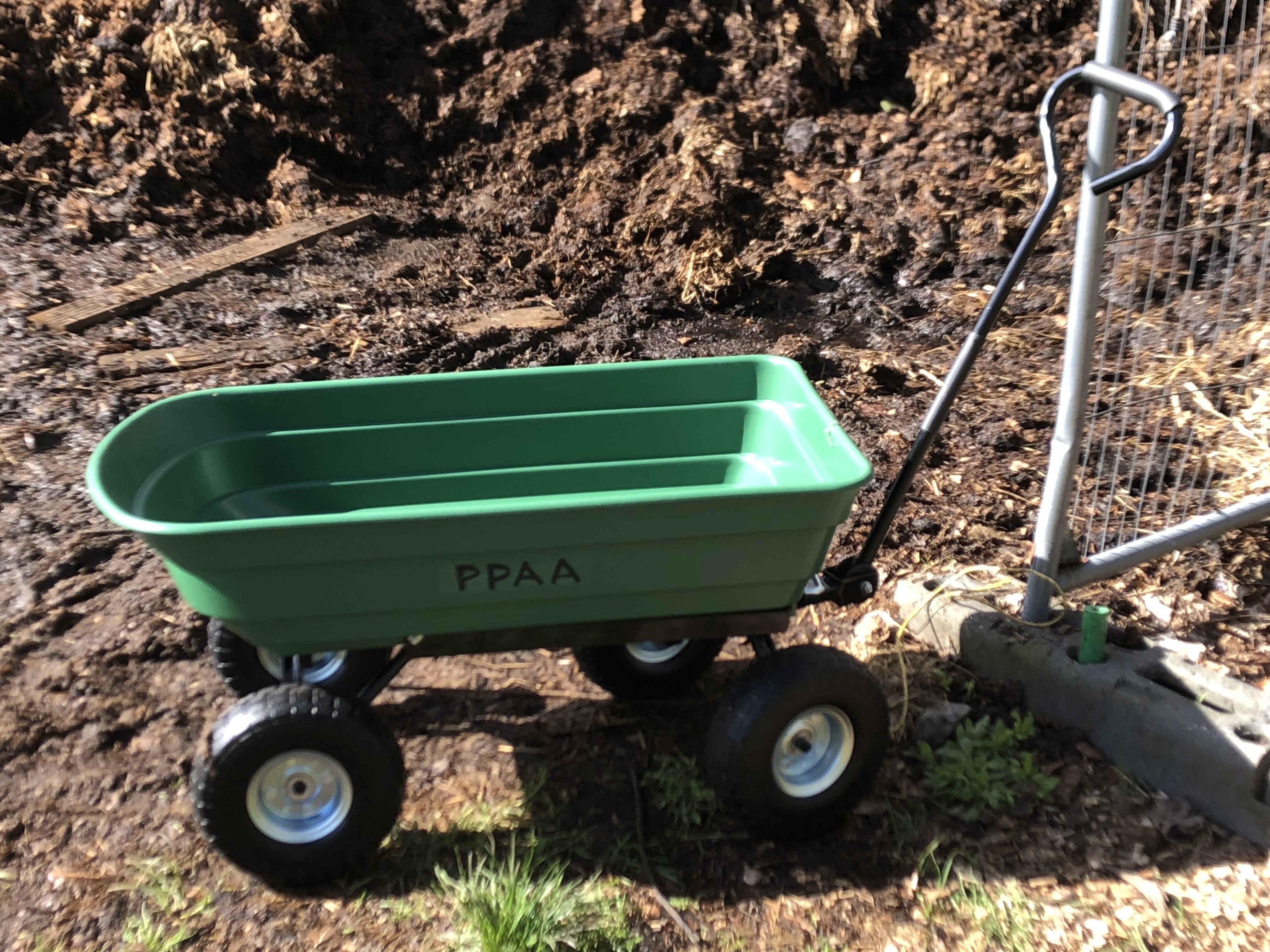
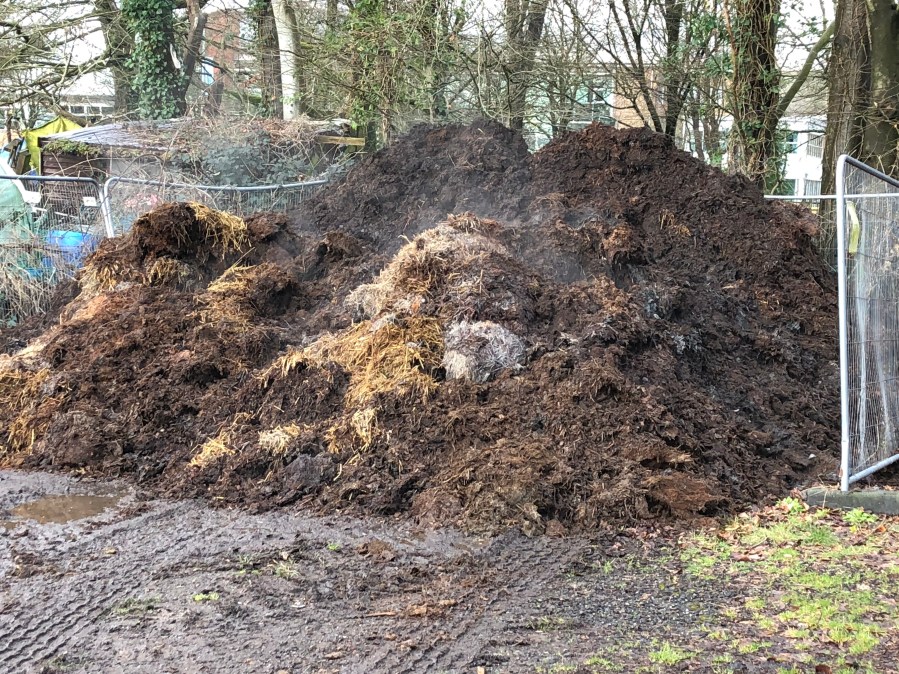
There are also images that a few people might prefer weren’t recorded. For instance the plot holders – who subscribe to the newsletters and therefore have been repeatedly reminded – who haven’t payed their five pounds (yes, only five pounds) subs for full PPAA membership, but who nonetheless helped themselves to a counted nineteen barrowloads of manure, over two occasions, in a borrowed wheelbarrow.* (One of these was also indicated, apparently vexatiously knocking over the doorstop blocks for the bring-and-take cubicle. You have to laugh…)

We did consider the idea of publishing those pictures, but we’d just ask that these folk – they know who they are – simply play the game, like nearly every one of their fellow gardeners does in good heart.

We’re pleased to report though, that in the areas covered, there was only one instance recorded, of any person’s being on the site during real night time over the last six weeks or so, and no instance of gates having been left open, so thanks to all for everyone’s care in that regard.

Whatever, the trials continue, but as a protection against theft, the particular equipment has been moved from the location revealed by the images in this article. So, wherever anyone might be on site, keep smiling 🙂

Site volunteers and Website Team

Right – you’re on!

The volunteers who did the recent work on the hedge improvements are sincerely grateful to the several gardeners, who spoke to them to offer to help with the planting of replacement hedging where the problematic, fast-growing subjects have now been removed. That assistance would be of great value and benefit, and so these kind ad hoc volunteers are invited to contact PPAA Committee by email (using the message page if they don’t have the address.) If everyone’s in agreement, then an email group etc. can easily be set up to co-ordinate the work.

Now that the somewhat onerous initial stage is over, the extent and type of work needed is clearer. It’s pleasing to see that there are quite a number of good mixed hedging subjects such as holly, hawthorn, and berberis. (There are in fact more of these than at first sight, because some had to be cut back quite rigorously to access e.g. sycamores for suppression, but they should readily sprout again.) This means that good replacement plantings can be done more simply than was at first thought to be likely, and the volunteers think that – at least as a holding position – infilling the gaps with pyracantha – firethorn – would tick all needed boxes for the time being, and other items – such as honeysuckle – can be planted among them at any time after.

Pyracantha* really is a very good thing to plant for this purpose. It’s attractive, dense, extremely thorny, and has strikingly colourful berries. Moreover, it’s evergreen, so continues to grow all year round. It’s also available from everyday suppliers in convenient form for planting, as here in the case of B&Q.

Pyracantha – “Red Column”

It’s not just for the enhanced benefits to site security, appearance, and wildlife support that this work is being done. PPAA are charged with the maintenance of most aspects of the site under a Local Management Agreement deed with the Council. It’s implicit in that duty then, that PPAA must preserve or improve the maintainability of the site. That means, that where possible, the burden of the work involved in so doing be reduced, so that there’s less for volunteers to do, or less expense involved in paying contractors to do it. In this case, where a fast-growing, tall hedge – which needs cutting three or even four times a year – can be transformed into one of moderate height, which only needs cutting once, then it behoves PPAA Committee to do this. Furthermore, such a transformation also greatly reduces the amount of biomass arising from such work and which requires disposal. This in turn frees up funds to support the central task of the Association, which is to ready plots for occupation by new tenants, that is, Cardiff Council Tax payers from the Waiting List.

*The Local Management Agreement – like our tenancies – doesn’t permit the planting, by anyone, of broadleaf, conifer, or willow trees anywhere on the site, and there’s no dispensation for doing that as hedging either, so pyracantha, which is generally considered to be a shrub, avoids any difficulty in this regard.

PPA Website Team

New Tenancy Agreement latest

Today saw the last meeting of the Working Group – Council Officials and site association delegates – on this subject. The Consultation responses have been analysed, and accordingly, in a few places, adjustments have been made.

The Council say that they will shortly write to all Site Representatives, then tenants, setting out the next steps in plain English / Welsh, and attaching a copy of the new Agreement. They will also include an executive summary of the consultation report. The process remains on course to have all of us tenants who wish to continue with our plots signed up to the new conditions by February 1st 2027. That is, there will be over a year’s notice, during which we can all make any changes needed to our plots.

With particular reference to the last sentence, the Working Group were told that the watchword, that the Council expect to be applied is “pragmatism“. That is, reasonableness, when it comes to enforcing the new conditions. For instance, it would be unconscionable to expect someone who had a previously approved greenhouse, somewhat larger than the new limit, to dismantle it, and it would also break the general convention on non-retrospection for rules where that would cause undue hardship. However, our understanding is that if a tenant’s breach of the rules were to be causing – or likely to cause – problems for anyone, then such breaches would receive priority for Council time on enforcement.

PPA Website Team

Windfall branches, notification emails

The recent windy weather has brought down some quite large branches from trees in the park and on to plots on PPA.

Fortunately PPAA has a volunteer with the necessary qualifications to deal with and to remove these, and he’ll attend to them over the next week or two. So if anyone should discover these on their plot, then all that they need to do is to wait.

While you’re here…

The website settings are such, that if a recipient should reply to this email using their own email account, then it’s been arranged that so doing will send an email to the PPAA gmail account.

However, the notification email also features a “comment button. Clicking on this will take the user to the comment section beneath the public website article notified by the email, where they can leave a public comment. That is, doing this will not send any email to the PPAA account.

The website has been receiving a few comments, worded as if the sender perhaps believed that they were private emails, and the gmail account emails worded as if they were maybe public comments.

(At one time PPAA used emailing software for its mailing list, but that isn’t any longer the case. Publishing communications to all on the website means that subscribers can be confident that they’re receiving the same as all the other recipients, whereas emailing software generally promotes – as an advantage – the capacity to send different messages to chosen groups.)

We hope that the above might have helped to clear up any uncertainty or misunderstanding.

PPA Website Team

Hedge improvements

The work – as resolved at Committee meetings – to replace the many presently unsuitable hedge components such as sycamore with better ones has begun.

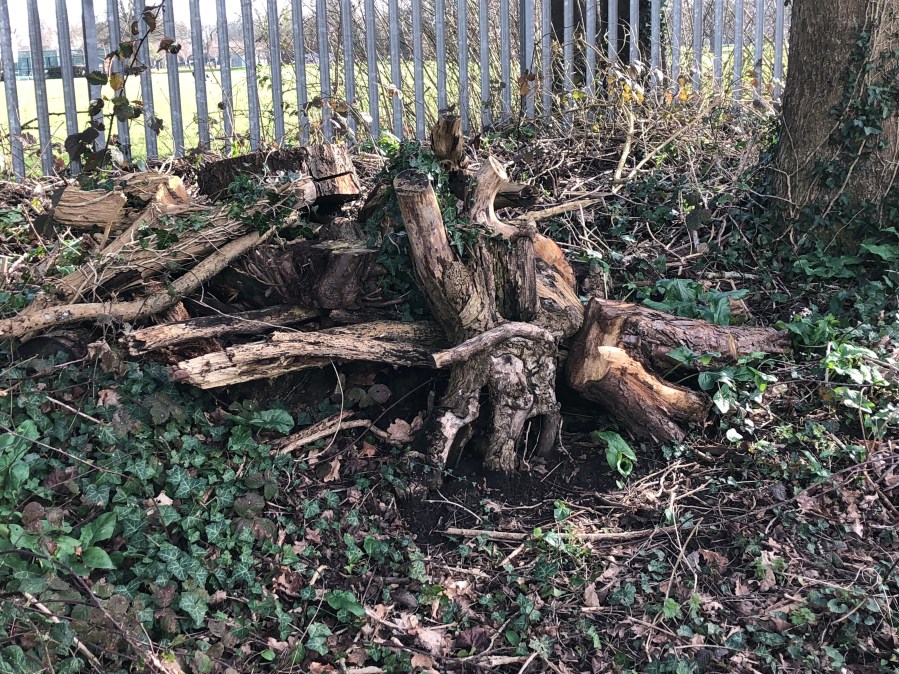
This shouldn’t cause a reduction in site security, as that job is now done by the adjoining abundant dry hedging, made mainly from the arisings from the crown lifting of the row of mature hawthorns (those are in fact the original PPA boundary hedge), and by the vigorous brambles which now permeate it too.

The sycamores etc. will be cut out or reduced, and the stumps deactivated. This will lead to temporary gaps in the hedge – some quite wide – but these will be replanted where needed with far better subjects such as sloe, hawthorn, barberry, pyracantha, etc., and interspersed with honeysuckle. Not only will these form a much denser and thorny hedge to prevent intruders, but they’ll be much slower growing, and therefore greatly reduce the maintenance burden and its cost to PPAA. They’ll also make far better nesting for birds, and the berries will provide food for a range of animals. So everyone’s asked not to be tempted to infill such gaps with prunings or other waste!

(There are in fact many of the latter already among the sycamores etc., but they’ve been crowded out and light starved by those up until now, so it’ll be rewarding to see them start to thrive at last.)

The planting of the new hedging ought to be generally pleasant work, but there’ll be quite a bit of it, so if anyone wants to volunteer to help, then their offer will definitely be very gratefully received.

PPA Website Team