
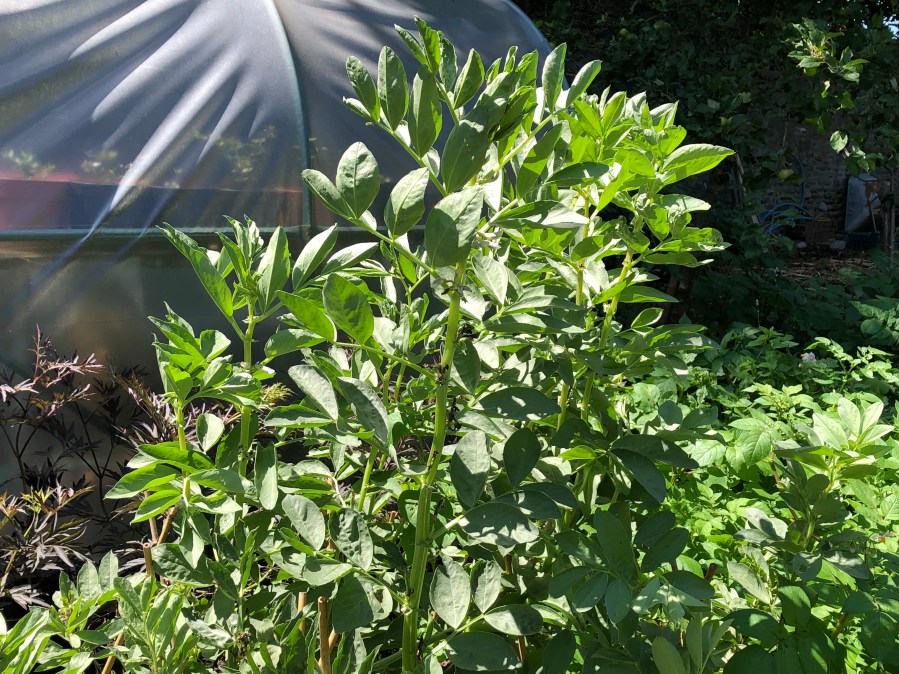
We planted broad beans a few weeks ago, but before they could get going they became weedy and sickly, having all the life sucked out of them by dense plaques of blackfly.
Whatever, we propped them up and carried on watering them.
However, a few days ago we noticed that they seemed to be recovering, making sturdy new growth with healthy flowers. On closer inspection we found that they were now populated by ladybirds, making a feast of the blackfly, and leaving relatively few behind. There were quite a few ladybird larvae too, always a good thing to see.


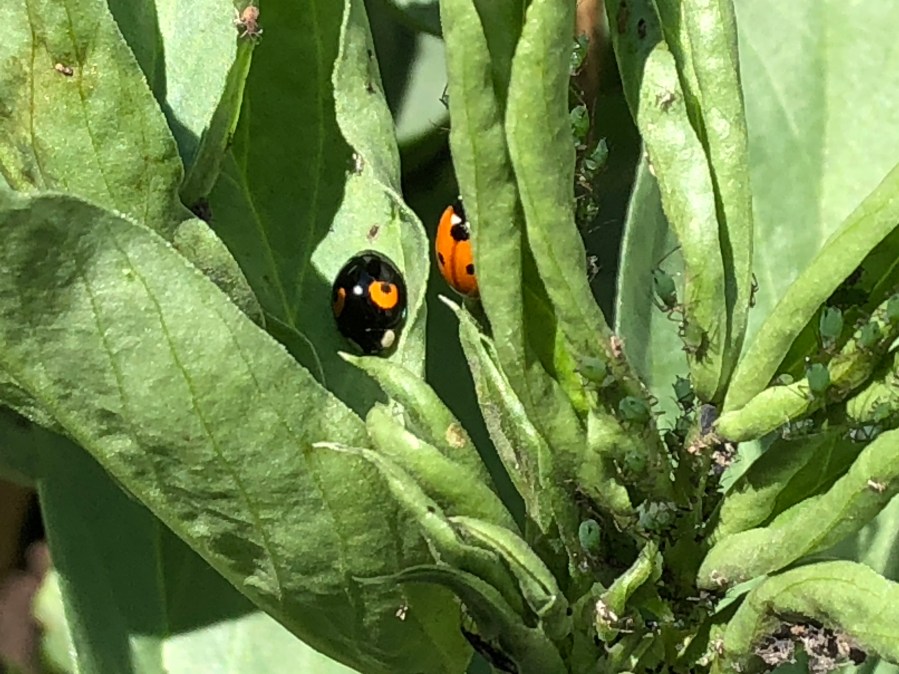
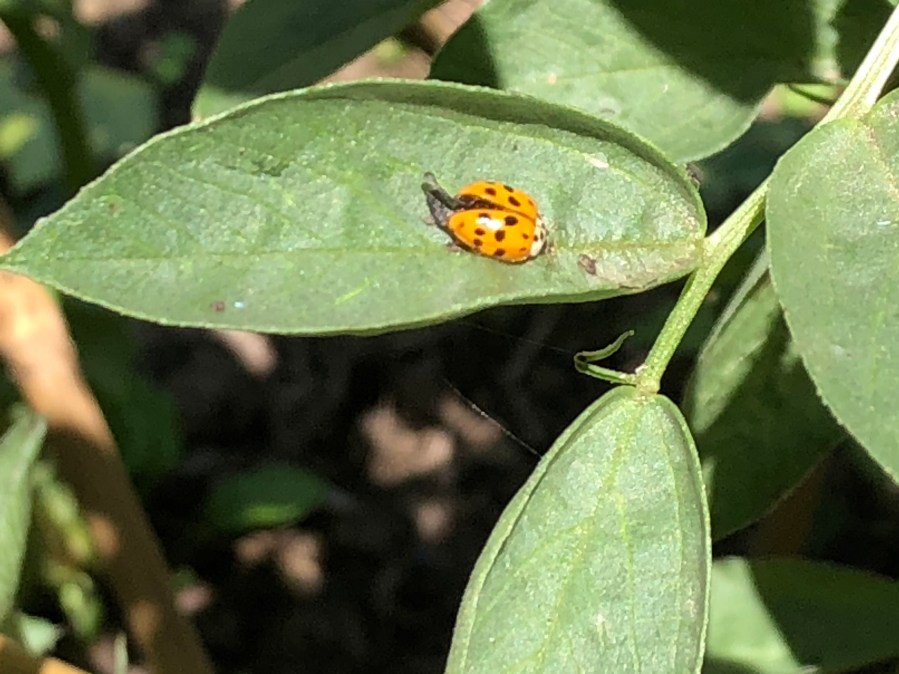

Most of the blackfly have now been eaten, but there still seem to be quite a few greenfly. Perhaps they’re the ladybirds’ second choice?

So if anyone should see blackfly, then we’d recommend checking for ladybirds before reaching for the insecticide spray, and they should remember that if they do use that, then they’ll likely kill off the ladybirds and their larvae too, so that when the blackfly return – as they will – there perhaps won’t be any ladybirds to deal with them. If there aren’t any ladybirds, then physical destruction of the aphids, by spraying the colonies with gentle detergent – e.g. water with washing up liquid – is to be preferred to chemical means anyway.
PPA Website Team

I’ve discovered that spraying water with some drops of peppermint essential oil also deters blackfly if caught early.
LikeLiked by 1 person
That’s one I haven’t heard of…I’ll give it a go. Thanks!
LikeLiked by 1 person
Or washing up liquid with sliced garlic sprayed on works a treat!
LikeLiked by 1 person