The expression “organic” gardening’s come to mean growing using only naturally-occurring materials and substances as fertilisers – as well as for pest and weed control, along with other manual or mechanical methods – which replace the use of synthetics. It’s not a condition of any Cardiff allotment that gardeners grow in this way, but plenty do, and many more do so in a practical, if not absolutist way too.
Organic growers will also often have a keen interest in environmental and ecological things – for instance be re-wilding activists – and have their own ethical angle, which can lead them to be vegetarian or vegan too.
The common – and sometimes unkind – caricatures of such people have led many to be misled, about what an organically-gardened plot would look like, and on the part of people taking on a plot to garden in that way, perhaps a mistaken idea, as to what one should look like, along with a sense of needing to conform to that. (That is, that it’d be a tangle of all manner of wild plant life, and of everything which goes with that – including exasperated neighbours, despairing at the myriad pests, seeds, and roots, which find their way onto their plots from it.)
Let’s recognise then, that if a plot’s going to be productive of food – as the Allotments Acts ask – then it’s unavoidable that there’s to be effective pest and weed control on it.
So, on a productive organic plot, typical methods would be the removal of, and constant disturbance of, the habitats for pests. That’d mean, for instance, that there wouldn’t be any dense patches of weeds close to crops, from which armies of slugs and snails would otherwise come to eat the produce. Along with this, if the ground were frequently hoed and raked to kill weeds organically, then at the same time, most slugs and their eggs living in the loose soil would also be destroyed.
Alec and Angie’s plot beside the spine road is one of the most efficiently productive on site, and this is exactly the approach that they take. The regular use of hoe and rake is made easier by their keeping the soil in good, workable condition with the frequent digging in of well-rotted manure*, and recycled compost from their heap.
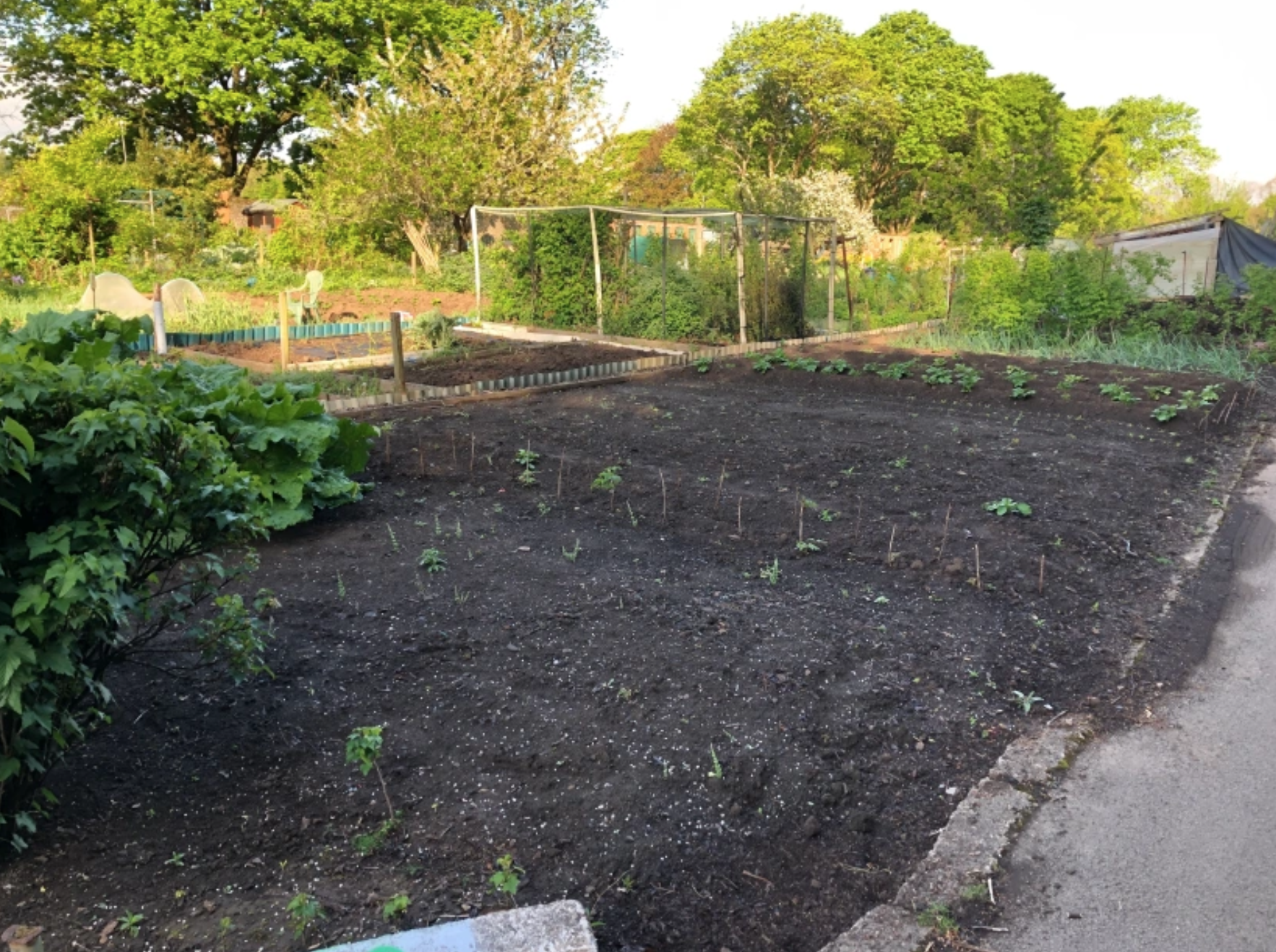
Bought fertilisers can be organic too, such as fish, blood, and bone, although vegetarian gardeners may understandably avoid some of these. Naturally-occurring dressings, such as gardener’s lime (mainly chalk, actually), the phosphorus-containing guano, and, for magnesium, Epsom salts, are also generally acceptable for the organic gardener.
Apart from its use as a fertiliser and soil conditioner, manure’s also hard to beat as a weed-suppressant mulch. Put on in a layer about 100mm (four inches) thick, after harvest and weeding, it’ll prevent the survival of the great majority seedlings which germinate beneath it, by sheer thickness and impenetrability. This’ll steadily rot until the next growing season, and at the same time soil life will also break it down, and mix it in with the soil.
Happy gardening – and eating!
*For the purist, allowing manure to rot for a good period before use – ideally two seasons – ensures that any veterinary medicines – or hormone weedkiller residues in the hay eaten by horses – will have been broken down by microorganisms and reduced to insignificant levels. (The RHS advice is that this is less important if the manure is simply to be used as a mulch, rather than being dug in.)
PPA Website Team